
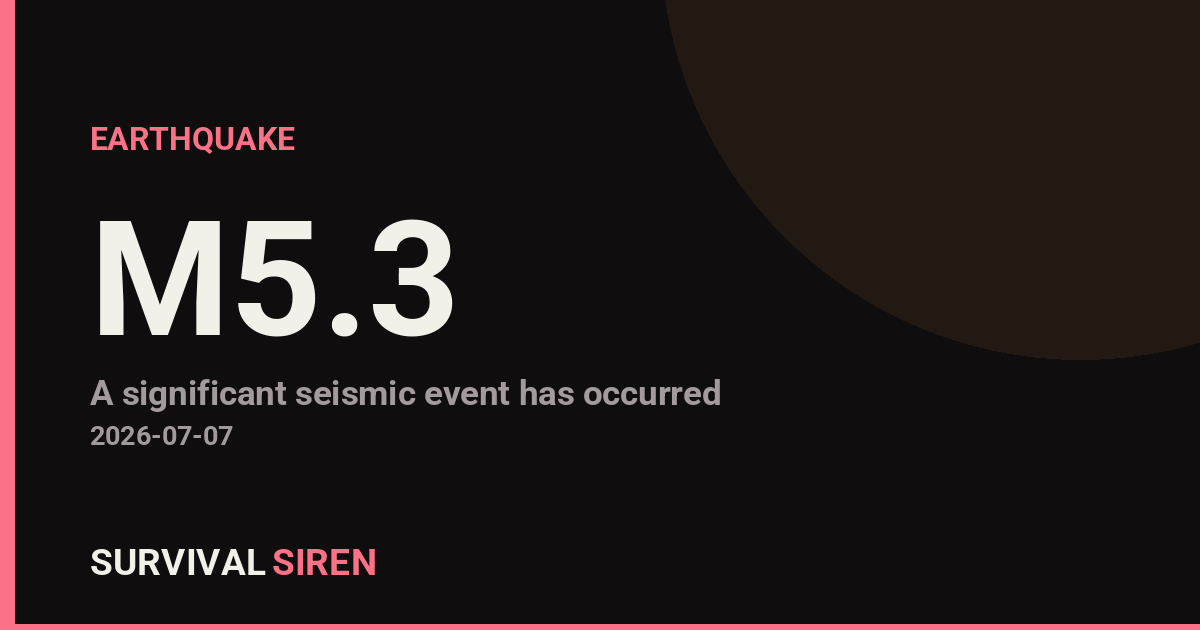
A magnitude 5.3 earthquake occurred approximately 10 kilometers west-southwest of Orotina, Costa Rica at 10 a.m. local time, according to the U.S. Geological Survey. The quake was centered at a depth of roughly 48 kilometers (about 30 miles) below the surface.
Residents across the Puntarenas Province and surrounding areas likely felt noticeable shaking. At this magnitude, people typically experience strong motion that can rattle objects on shelves, cause minor rattling of dishes, and occasionally crack plaster or drywall in older structures. Most modern buildings in the region are designed to withstand earthquakes of this size with minimal damage.
Costa Rica sits along the Pacific Ring of Fire and experiences frequent seismic activity due to its position on the boundary of the Caribbean and Cocos tectonic plates. This event is consistent with normal regional geological activity and does not indicate unusual patterns.
What to Watch
Aftershocks: Smaller aftershocks often follow earthquakes of this magnitude. If you’re in the region, be prepared for additional tremors over the coming hours or days. Keep emergency supplies accessible and avoid damaged buildings.
Local alerts: Monitor official channels from Costa Rica’s National Emergency System (Sistema Nacional de Prevención de Riesgos y Atención de Emergencias) for any updates on infrastructure damage or hazards.
Structural assessment: If you’re in an affected area, inspect your home or workplace for any cracks, broken glass, or damage to utilities. Report serious damage to local authorities.
Preparedness reminders: Keep a go-bag ready with water, a flashlight, first aid supplies, and important documents. Know your safe spots during shaking—under sturdy tables or against interior walls away from windows. Establish a family communication plan in case phone lines become congested.
Real-time earthquake data is available through the USGS Earthquake Hazards Program and local Costa Rican seismic networks.
Sky Conditions at the Time
Moon: Last Quarter (50% illuminated), in Aries.
Notable planetary angles: Sun square Moon (90°), Moon conjunct Saturn (1°), Sun square Saturn (91°).
This is a factual snapshot, not a claim of cause and effect – researchers are divided on whether lunar, planetary or solar factors influence seismic or weather activity. It’s included so readers can track the pattern for themselves over time.
Earthquakes Within ~400 km, Past 30 Days
For context, here is other recent seismic activity in the surrounding region (M2.5+, via USGS):
| Date & Time (UTC) | Magnitude | Location |
|---|---|---|
| 2026-07-18 23:31 UTC | M4.7 | 80 km SW of Masachapa, Nicaragua |
| 2026-07-06 02:37 UTC | M4.7 | 83 km SW of San Juan del Sur, Nicaragua |
| 2026-07-03 04:18 UTC | M4.2 | 6 km WNW of Tejar, Costa Rica |
| 2026-07-01 13:41 UTC | M4.4 | 21 km NW of Golfito, Costa Rica |
| 2026-06-26 11:57 UTC | M5.2 | 7 km NE of Villa El Carmen, Nicaragua |
| 2026-06-24 18:38 UTC | M4.1 | 55 km WNW of Tamarindo, Costa Rica |
Emergency number for Costa Rica: 911 (General guidance – always verify locally, as this can vary by region.)