
Millions of people across Africa are currently living with unreliable or unavailable electricity, even as an estimated $293 billion in green hydrogen and renewable energy projects have been announced or planned on paper across the continent. The contrast highlights a persistent problem: large energy investments are not yet translating into dependable power for households and businesses.
Power reliability varies widely by country, but the scale of the issue is significant. Hundreds of millions of people across sub-Saharan Africa lack access to electricity altogether, and many more who are connected to the grid experience frequent rolling blackouts, load shedding, or unplanned failures. South Africa’s ongoing load-shedding program and grid instability in Nigeria are among the most visible examples, but outages affect much of the region.
What readers might notice
For residents in affected areas, outages can mean hours to days without refrigeration, lighting, phone charging, water pumping, or medical equipment. Businesses, schools, and hospitals often rely on diesel generators, which are expensive and can fail under sustained demand. Travelers in the region may encounter disruptions at airports, hotels, and on road networks where traffic signals and fuel stations lose power.
It is worth noting what this situation is not: these outages are driven by infrastructure shortfalls, underinvestment in transmission and distribution, fuel supply constraints, and aging equipment — not by space weather or geomagnetic activity. No solar-storm-related grid damage has been reported in connection with this event.
Sensible steps for those in affected areas: keep phones and battery banks charged whenever power is available, maintain a small supply of water and shelf-stable food, and know where the nearest facility with generator backup (hospital, pharmacy) is located. Anyone relying on powered medical devices should have a backup plan and register with their utility’s priority-restoration list where available.
Data and reporting on grid conditions come from national utilities, the International Energy Agency, and regional energy regulators; space-weather conditions, when relevant, are monitored by NOAA’s Space Weather Prediction Center.
Frequently Asked Questions
Is this outage caused by a solar storm or space weather?
No. These outages stem from infrastructure gaps, fuel and generation shortages, and transmission problems across African grids. No geomagnetic storm or transformer damage from space weather has been reported in connection with this event.
How many people are actually affected?
Roughly 600 million people in sub-Saharan Africa lack access to electricity entirely, and many more connected to the grid face daily rolling blackouts or load shedding, particularly in South Africa and Nigeria.
If there’s $293 billion in energy investment, why is the power still out?
Most of that money is tied to announced or planned green hydrogen and export-oriented projects, not to fixing local transmission lines and distribution networks that deliver power to homes. Grid-level reliability investment has lagged far behind.
What should I do if I’m in an affected area right now?
Charge devices and battery packs whenever power is on, keep water and non-perishable food on hand, and limit opening refrigerators to preserve cold. If you depend on powered medical equipment, arrange backup power or identify the nearest facility with a generator.
Keep tracking this:
Source: Devdiscourse
Related Reading
Sky & Solar Conditions at the Time
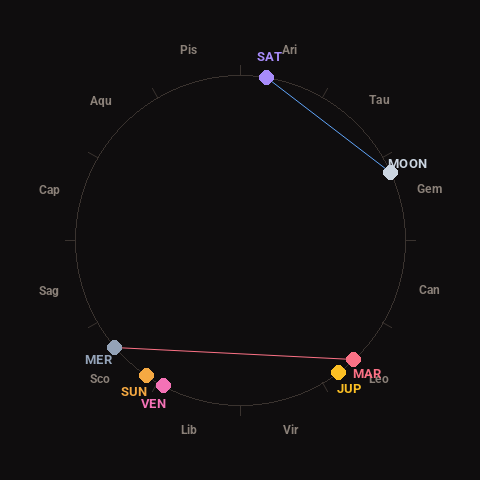
Moon: Waning Gibbous (93% illuminated), in Gemini.
Notable planetary angles: Mercury square Mars (93°), Moon sextile Saturn (56°).
Concurrent space weather: planetary Kp index 1.7; strongest recent solar flare: nothing notable.
This is a factual snapshot, not a claim of cause and effect – researchers are divided on whether lunar, planetary or solar factors influence seismic or weather activity. It’s included so readers can track the pattern for themselves over time.