
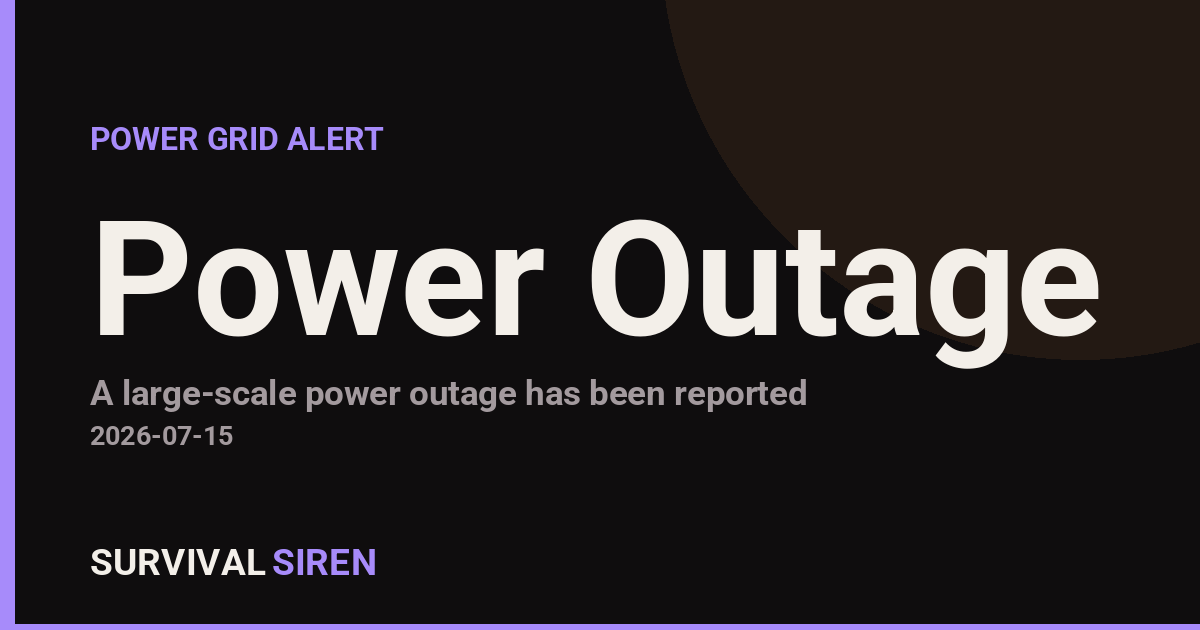
Cuba has experienced its third nationwide blackout in two weeks, affecting millions of residents across the island. While fuel shortages are the primary cause in this case, widespread power outages of this scale can also result from severe space weather events—something we monitor closely here at SurvivalSiren.
During strong geomagnetic storms, the sun’s energy can induce dangerous electrical currents in power grid transformers, potentially causing cascading failures across entire regions. Although space weather is not the culprit this time, Cuba’s repeated outages highlight how vulnerable modern infrastructure can be to both earthly and cosmic disruptions.
What People in Affected Areas Are Experiencing: Citizens face disrupted water supplies (many systems are electric-dependent), limited access to refrigeration, halted transportation, and communication challenges. Hospitals and essential services are operating on backup generators where available.
Who Is Most Affected: Cuba’s 11+ million residents, particularly those in rural areas with fewer backup resources. The outages also impact regional trade and tourism.
Three Practical Preparedness Reminders
1. Build a Basic Outage Kit: Keep battery-powered flashlights, a hand-crank radio, and first-aid supplies accessible. Store at least one gallon of water per person per day for 3–7 days.
2. Protect Critical Devices: Use surge protectors and uninterruptible power supplies (UPS) for medical equipment, phone chargers, and important electronics. During geomagnetic storms, large transformers are at particular risk.
3. Know Your Local Grid Vulnerabilities: Research whether your region relies on aging infrastructure or is prone to cascading failures. Community preparedness plans and local emergency management offices can provide details.
Events like Cuba’s outages—whether caused by fuel scarcity or space weather—remind us that stable power cannot always be assumed. Taking basic steps now makes a real difference when disruptions occur.
For live space weather updates and geomagnetic storm alerts, visit our space weather dashboard powered by NOAA data.