
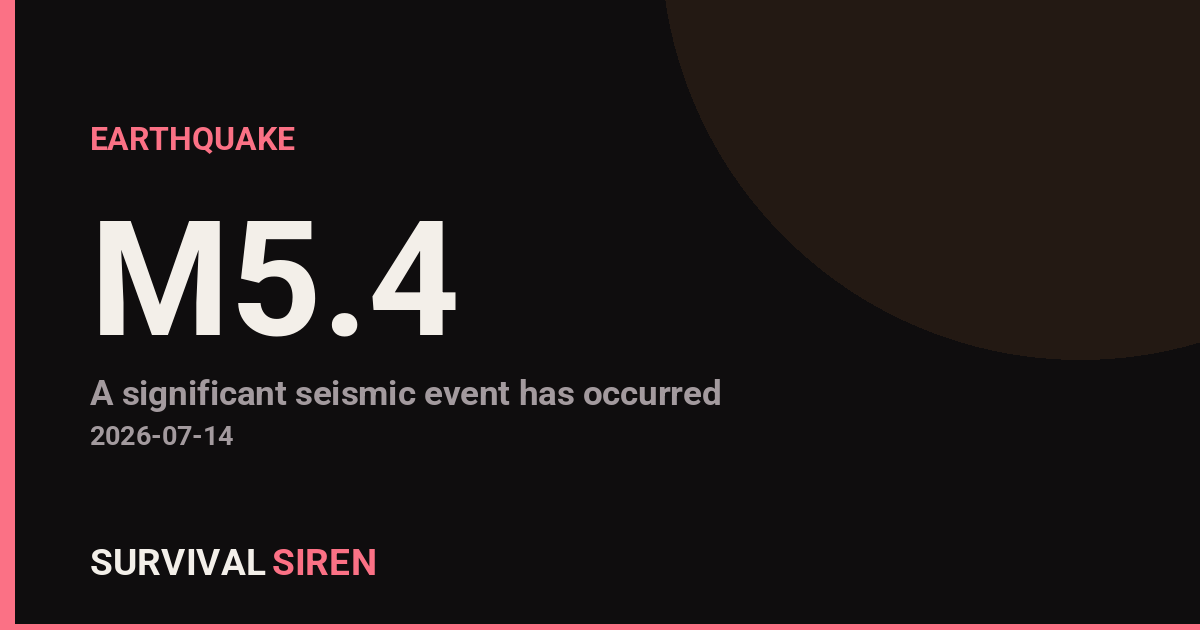
A magnitude 5.4 earthquake occurred approximately 90 kilometers south-southeast of False Pass, Alaska at 47 kilometers depth, according to the U.S. Geological Survey. This moderate-strength quake struck in a seismically active region of southwestern Alaska.
What You Might Notice
Residents in False Pass and nearby communities would likely have felt noticeable shaking. A magnitude 5.4 at this depth typically produces strong ground motion in the immediate area but generally does not cause widespread damage. People in the region may have experienced rattling objects, swaying structures, and brief but distinct movement lasting 10-30 seconds.
Who Is Affected
The primary impact zone includes False Pass and other small communities in the Aleutian Islands region. Sparse population density in this area means fewer residents are directly affected compared to earthquakes near major cities. However, local infrastructure, fishing operations, and maritime activities in the Bering Sea could experience minor disruptions.
What to Watch
1. Aftershock Activity: Magnitude 5+ earthquakes often trigger smaller aftershocks in the following hours and days. Monitor USGS earthquake reports for follow-up activity in the same region.
2. Coastal Changes: While not tsunami-generating based on initial assessments, moderate earthquakes in ocean regions warrant brief attention to local marine forecasts and any official coastal advisories.
3. Infrastructure Checks: If you live in Alaska or frequently travel there, use events like this as reminders to secure heavy items, maintain emergency supplies, and review your family’s earthquake response plan.
For those in earthquake-prone regions, this is a practical reminder to keep emergency kits accessible and ensure household members know how to respond when shaking occurs—drop, cover, and hold on being the fundamental action.
Real-time earthquake data is provided by the U.S. Geological Survey. For live space weather and seismic monitoring, visit the SurvivalSiren live dashboard.
Source: USGS