
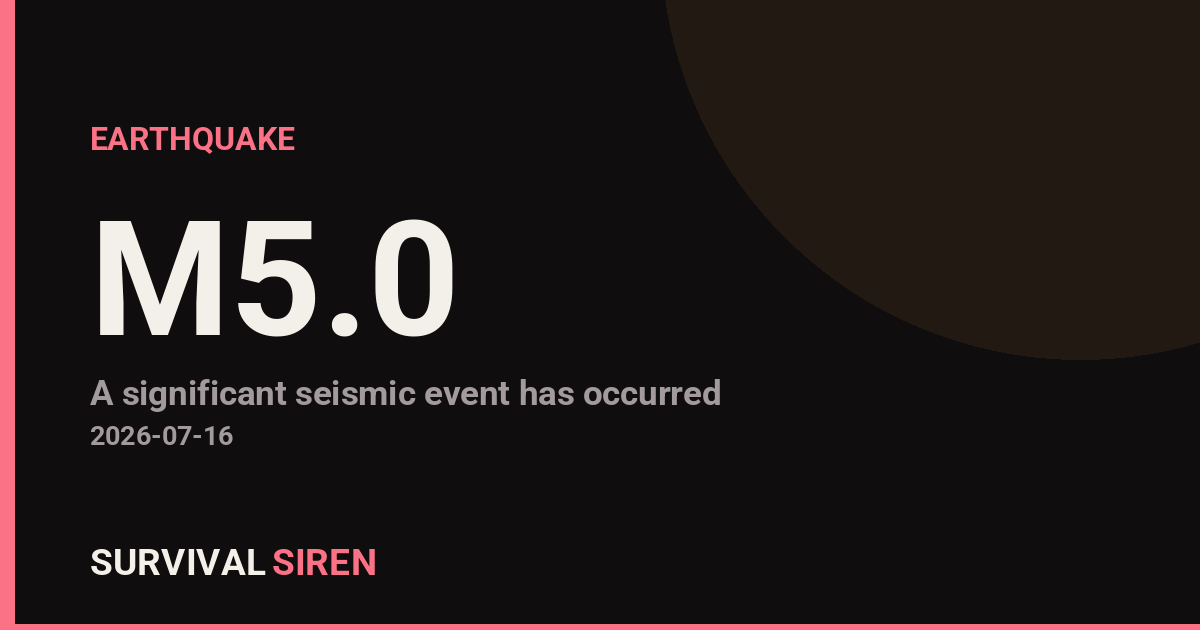
A magnitude 5.0 earthquake occurred on the southern Mid-Atlantic Ridge at approximately 10 kilometers (6 miles) depth, according to the U.S. Geological Survey. The Mid-Atlantic Ridge is an underwater mountain range that runs down the center of the Atlantic Ocean, separating the North American and Eurasian plates from the South American and African plates.
Earthquakes in this remote oceanic location are relatively common as the Earth’s tectonic plates continue their natural movements. While the shaking from this moderate-magnitude quake would be strongest in the immediate surrounding seafloor area, it is unlikely to have caused significant damage to populated regions, since the epicenter is located thousands of miles from any major coastline.
What You Might Notice
Residents in coastal areas of the eastern Atlantic seaboard—including parts of Portugal, West Africa, or northeastern North America—may have experienced minor vibrations if they were near sensitive monitoring equipment or in areas with very soft ground conditions. For most people, this earthquake would go unnoticed.
Ocean-based research stations and ships in the immediate area may have recorded the event on sensitive seismographs, but no tsunami warning was issued for this magnitude and depth.
Who Is Affected and What to Watch
This event primarily affects scientific monitoring networks and marine research operations. However, it’s a good reminder for coastal residents to review basic earthquake preparedness: (1) Know your home’s safest spots—sturdy tables or interior walls—in case stronger quakes occur closer to land. (2) Keep a basic emergency kit accessible with water, flashlights, and first-aid supplies. (3) Stay informed through official USGS and NOAA alerts rather than social media rumors.
Mid-Atlantic Ridge activity is monitored continuously by global seismic networks as part of our understanding of plate tectonics and ocean floor evolution.
For live space weather and seismic updates, visit the NOAA data dashboard at https://survivalsiren.com/spaceweather/feed.html.
Source: USGS