
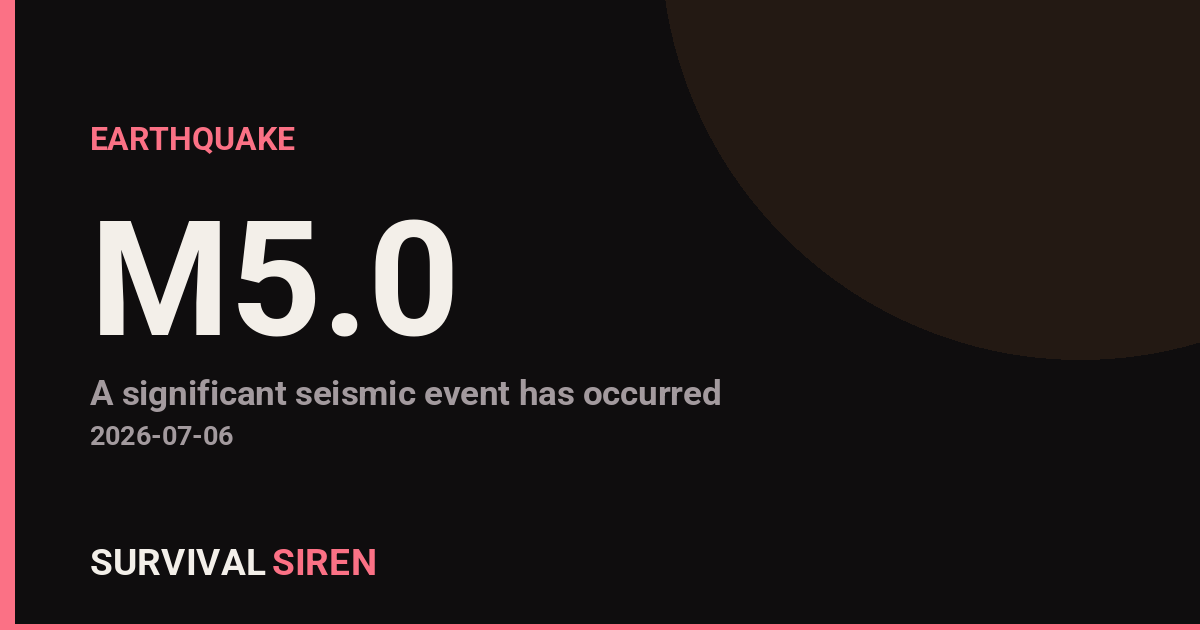
A magnitude 5.0 earthquake occurred approximately 98 kilometers northwest of Coquimbo, Chile at 10 km depth, according to the U.S. Geological Survey. This moderate-strength quake was felt across the surrounding region of central Chile.
Magnitude 5.0 earthquakes typically cause light to moderate shaking. Residents in and near Coquimbo—a coastal city of roughly 230,000 people—likely experienced noticeable movement, swaying of structures, and rattling of objects. Damage is generally limited to older or poorly constructed buildings in a moderate earthquake of this size, though aftershocks remain possible in the hours and days ahead.
The earthquake’s shallow depth of 10 km contributed to the strength of shaking felt at the surface. Northern Chile sits along the Nazca Plate subduction zone, one of the world’s most seismically active regions, making earthquakes in this area a regular occurrence.
What to Watch
Aftershock activity: Magnitude 5.0 events can trigger smaller aftershocks (typically magnitude 2.0–4.0). Monitor official USGS or Chilean seismic agency updates over the next 24–48 hours if you’re in or near the affected area.
Tsunami potential: Underwater earthquakes near subduction zones can generate tsunamis. While a 5.0 at this depth is unlikely to produce a significant tsunami, coastal residents should check local emergency alerts and official sources for any warnings.
Building inspections: If you live in the region and felt strong shaking, visually inspect your home for new cracks in walls, displaced items, or structural changes. Report serious damage to local authorities.
Preparedness reminders: keep emergency kits accessible, know your safe spots indoors (under sturdy tables or against interior walls), and stay informed through official channels rather than social media for the most accurate updates.
Track ongoing seismic activity and space weather events on the live NOAA data dashboard at https://survivalsiren.com/spaceweather/feed.html.
Sky Conditions at the Time
Moon: Last Quarter (64% illuminated), in Pisces.
Notable planetary angles: Sun square Saturn (90°), Moon trine Jupiter (123°), Moon trine Mercury (116°).
This is a factual snapshot (timed to this post’s publish time, as an approximation), not a claim of cause and effect – researchers are divided on whether lunar, planetary or solar factors influence seismic or weather activity. It’s included so readers can track the pattern for themselves over time.