
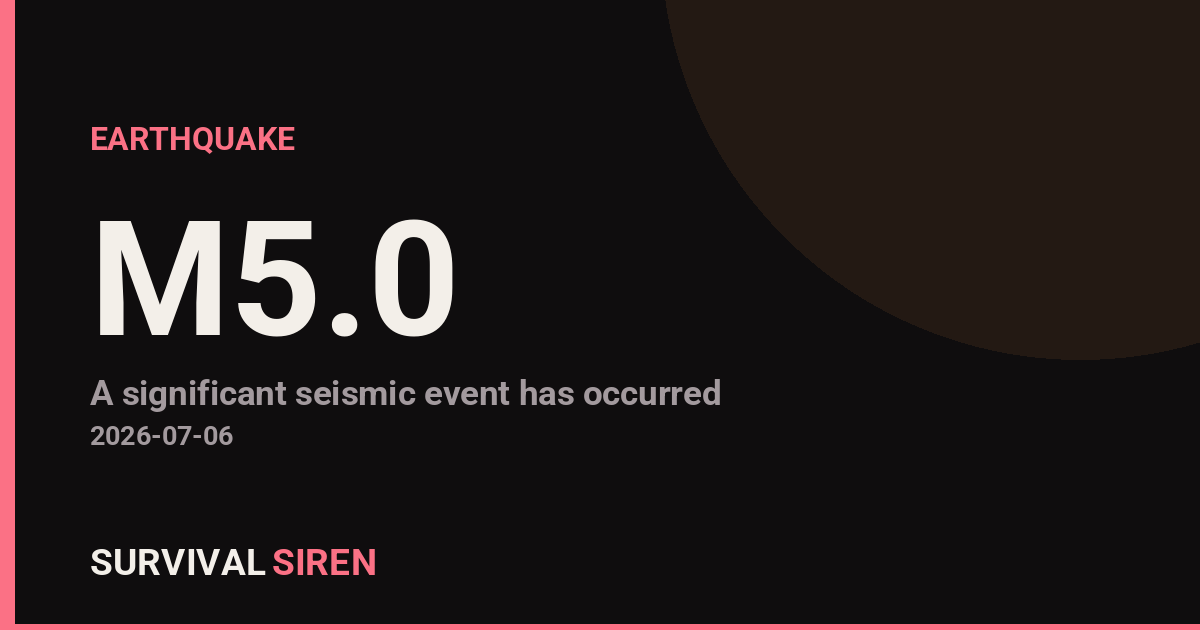
A magnitude 5.0 earthquake occurred near Mianzhu in Sichuan Province, China, approximately 23 kilometers northwest of the city. The quake struck at a shallow depth of about 10 kilometers, which typically allows seismic waves to travel effectively through the surrounding region.
At this magnitude, shaking would be felt across a considerable area around the epicenter. Residents in nearby cities and towns likely experienced noticeable motion, though damage at magnitude 5.0 is generally limited to older or poorly constructed buildings. This is a moderate earthquake—strong enough to be felt and cause concern, but not typically catastrophic.
Who This Affects
The primary impact zone includes Mianzhu, Deyang, and surrounding communities in central Sichuan. Residents in the region should assess their immediate surroundings for any structural damage or hazards. The broader Sichuan Province and neighboring areas may have felt lighter shaking.
What to Watch For
Aftershocks: Following a magnitude 5.0 event, smaller aftershocks are common over the coming hours and days. Stay alert and keep emergency supplies accessible.
Building assessments: If you’re in the affected region, check your home and workplace for new cracks, shifted items, or structural concerns. Document any damage with photos for insurance purposes.
Emergency preparedness review: Use this event as a reminder to verify your earthquake kit is stocked (water, first aid, battery-powered radio, medications) and that household members know your emergency plan and safe meeting locations.
While SurvivalSiren focuses primarily on space weather monitoring, earthquakes are a critical part of natural hazard awareness. For ongoing seismic updates specific to this region, check official USGS and Chinese seismic monitoring sources. Monitor our live space weather dashboard at https://survivalsiren.com/spaceweather/feed.html for alerts on solar activity and geomagnetic conditions that may affect communications infrastructure during emergencies.
Sky Conditions at the Time
Moon: Last Quarter (64% illuminated), in Pisces.
Notable planetary angles: Sun square Saturn (90°), Moon trine Jupiter (123°), Moon trine Mercury (116°).
This is a factual snapshot (timed to this post’s publish time, as an approximation), not a claim of cause and effect – researchers are divided on whether lunar, planetary or solar factors influence seismic or weather activity. It’s included so readers can track the pattern for themselves over time.