
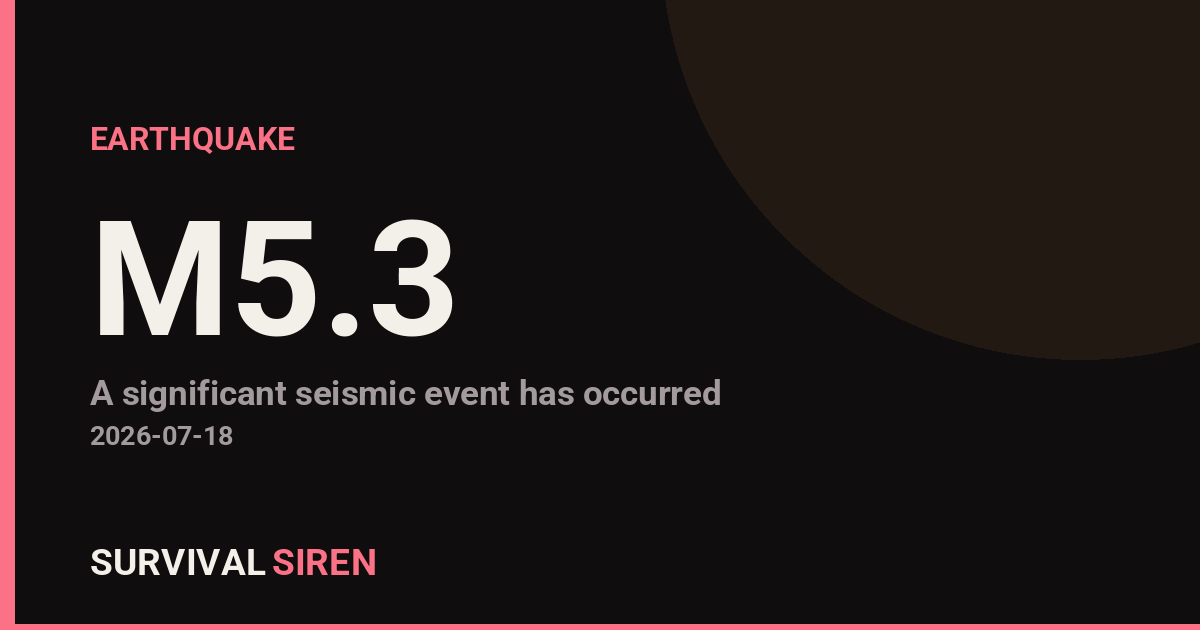
A magnitude 5.3 earthquake occurred approximately 119 kilometers southwest of Sarangani, Philippines at 10 km depth, according to the U.S. Geological Survey (USGS). While moderate in strength, earthquakes at this magnitude and shallow depth typically produce noticeable shaking across the surrounding region.
What You Might Notice
Residents within 50-100 km of the epicenter may have felt moderate shaking lasting 10-20 seconds. Depending on local building construction and soil conditions, some structures could experience minor damage. Areas closer to the coast should monitor for any unusual ocean activity, though this earthquake’s depth and location make a significant tsunami unlikely.
Who Is Affected
The primary impact zone includes Sarangani Province and nearby regions in Mindanao’s southern tip. Communities in General Santos City, Cotabato, and surrounding areas are most likely to have felt the tremors. People in metro areas with older buildings or soft soils may experience stronger effects than those in newer, engineered structures.
Practical Steps to Take
1. Check in with local contacts: If you have family or friends in the region, reach out to confirm they’re safe. Local communication networks may be briefly disrupted.
2. Monitor official updates: Follow Philippine seismic agencies and USGS for aftershock reports. Magnitude 5+ earthquakes can trigger smaller aftershocks over the following hours or days.
3. Review your earthquake kit: This is a good reminder to ensure your household has water, first aid supplies, and a communication plan if you live in an earthquake-prone area.
For those tracking natural hazards and space weather impacts on Earth systems, remember that while earthquakes aren’t caused by solar activity, preparedness for all natural events strengthens community resilience. Monitor the latest seismic data through official USGS channels and local Philippine Seismic Network reports.
Source: USGS