
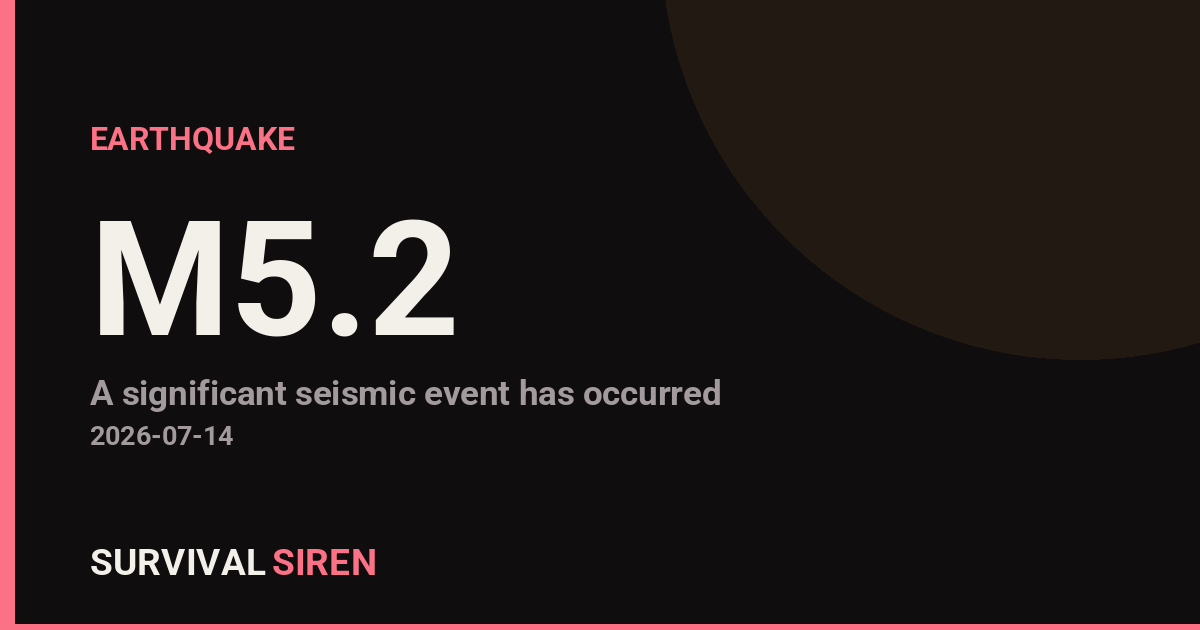
A magnitude 5.2 earthquake occurred approximately 14 kilometers west-southwest of Mabiton, Philippines at a shallow depth of 10 kilometers, according to the U.S. Geological Survey (USGS). Shaking from this moderate-strength quake would likely be felt across the surrounding region.
What This Means Locally
At magnitude 5.2, this earthquake falls into the moderate range. People in nearby communities would have felt noticeable shaking, with some reports of minor damage possible in older structures or poorly constructed buildings. The shallow depth of 10 km means energy was released closer to the surface, potentially making the shaking more strongly felt than it would be at greater depths.
What to Watch For
Aftershocks: Moderate earthquakes frequently trigger smaller aftershocks in the hours and days following. Residents should remain alert and prepared for continued ground movement, though aftershocks typically decrease in frequency and strength over time.
Regional Updates: Monitor local Philippine seismic agencies and the USGS for updated reports. Official sources will provide the most accurate information about damage assessments and any changes to the situation.
Structural Safety: If you’re in the affected area, take time to inspect your home or building for any new cracks or damage. Document any issues with photos for insurance purposes if needed.
The Philippines sits along the Pacific Ring of Fire, a seismically active zone where earthquakes are relatively common. If you live in or travel to earthquake-prone regions, keeping an emergency kit accessible—with water, first aid supplies, flashlights, and battery-powered radio—remains one of the most practical preparedness steps you can take.
For real-time space weather and geophysical event tracking, visit the live dashboard at https://survivalsiren.com/spaceweather/feed.html, where we aggregate data from NOAA and partner agencies.
Source: USGS