
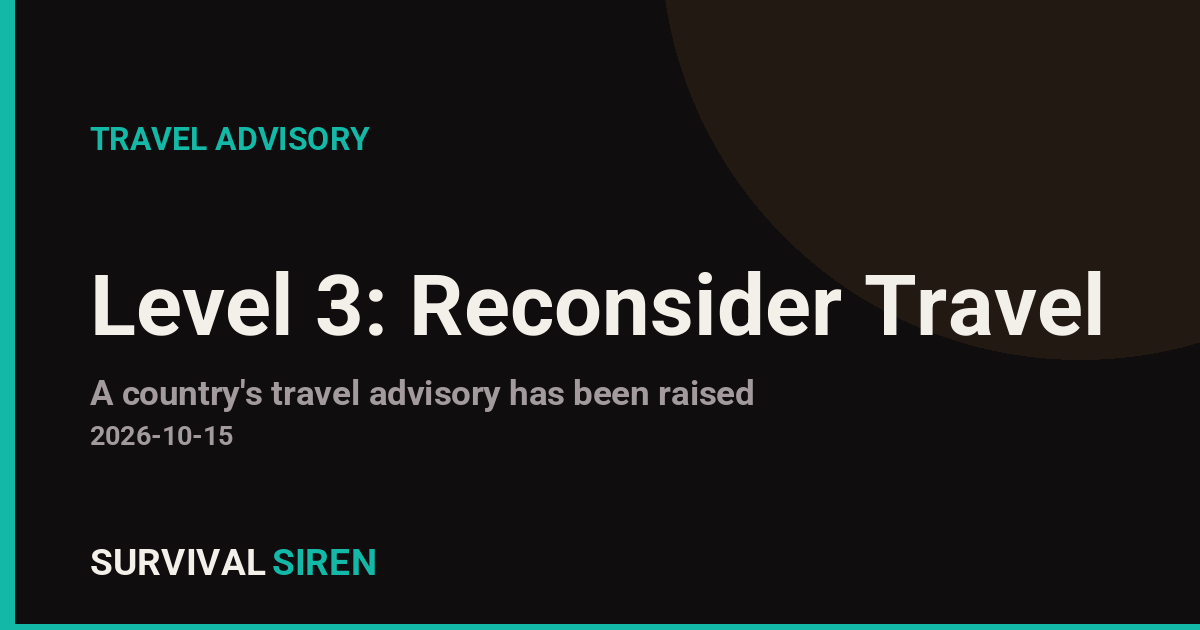
The U.S. State Department has raised its travel advisory for Papua New Guinea to Level 3: Reconsider Travel. This is the first change to the country’s advisory level that SurvivalSiren has tracked, and it means the U.S. government is formally urging Americans to think carefully before going.
The escalation is driven by crime, civil unrest, and piracy. The advisory also flags kidnapping, unexploded ordnance (leftover explosives from past conflicts that can still detonate), inconsistent availability of healthcare, and the potential for natural disasters. According to the advisory, violent crime — including sexual assault, carjackings, home invasions, and armed robberies — is common, and there have been reports of criminals attacking resorts popular with foreign tourists to steal goods. Some areas of the country carry even higher risk than the national level.
Who is affected and what to watch
This affects U.S. citizens with upcoming trips to Papua New Guinea, expatriates and aid workers already in the country, and families with loved ones traveling there. It does not restrict travel outright — Level 3 is a strong recommendation, not a ban — but it can affect travel insurance coverage, employer travel policies, and consular support options.
Practical steps if you or someone you know is affected: review the full advisory for region-specific risk levels before any travel; enroll in the State Department’s Smart Traveler Enrollment Program (STEP) so the embassy can reach you in an emergency; and check whether your travel insurance covers cancellations tied to advisory changes. If you are already in Papua New Guinea, keep a low profile, avoid displaying valuables, and know that medical care may be limited outside major cities — a medical evacuation plan is worth confirming.
This alert is based on the U.S. Department of State’s official travel advisory for Papua New Guinea.
Frequently Asked Questions
Does Level 3 mean I can't travel to Papua New Guinea?
No. Level 3 ('Reconsider Travel') is a strong recommendation, not a prohibition — only Level 4 ('Do Not Travel') carries a firmer warning. However, your travel insurance or employer may treat a Level 3 destination differently, so check before you go.
I'm currently in Papua New Guinea — should I leave immediately?
The advisory does not order a departure, but it recommends exercising increased caution and being aware that some areas carry higher risk than others. Make sure you're enrolled in STEP and know the location and contact details of the U.S. embassy in Port Moresby.
What are the main dangers the advisory cites?
Violent crime — including sexual assault, carjackings, home invasions, and armed robberies — is common, and resorts popular with foreign tourists have been attacked. The advisory also cites civil unrest, piracy, kidnapping, unexploded ordnance, and limited healthcare availability.
Will my travel insurance still cover a trip there?
Some policies exclude or limit coverage for destinations under a Level 3 advisory, while others allow cancellation due to the advisory change itself. Contact your insurer directly before traveling or booking.
Keep tracking this:
Source: U.S. Department of State
Related Reading
Sky & Solar Conditions at the Time
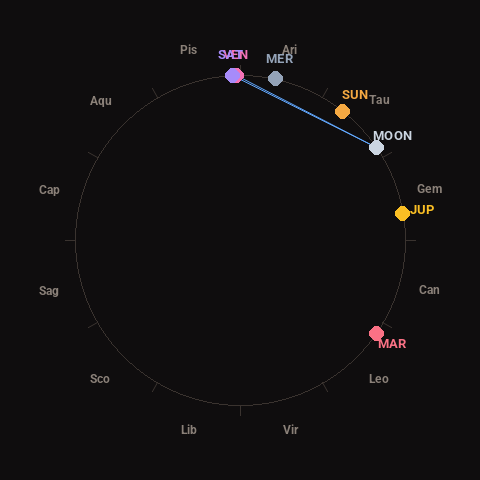
Moon: New Moon (2% illuminated), in Taurus.
Notable planetary angles: Venus conjunct Saturn (1°), Moon sextile Saturn (58°), Moon sextile Venus (57°).
Concurrent space weather: planetary Kp index 3.0; strongest recent solar flare: nothing notable.
This is a factual snapshot, not a claim of cause and effect – researchers are divided on whether lunar, planetary or solar factors influence seismic or weather activity. It’s included so readers can track the pattern for themselves over time.