
The U.S. State Department has reissued its travel advisory for North Korea at Level 4 — ‘Do Not Travel,’ the most serious warning on its four-level scale. The advisory was updated after a periodic review with minor edits, but the core message is unchanged: Americans should not travel to the Democratic People’s Republic of Korea (DPRK) for any reason.
The reason given is the continuing serious risk of arrest, long-term detention, and wrongful detention of U.S. nationals. The State Department has long warned that the North Korean government has detained Americans over minor or unclear infractions, and that the U.S. has no embassy or consulate in the country — meaning there is no direct way to help a detained citizen. Sweden serves as the U.S. protecting power there, but its access to detained Americans is often limited or denied.
What this means for travelers
U.S. passports are not valid for travel to, in, or through North Korea unless specially validated by the Secretary of State, and such validations are granted only in rare cases, such as certain journalists or humanitarian workers. This restriction has been in place since 2017. Ordinary tourists, business travelers, and dual nationals are not exempt.
Practical pointers: (1) If you or a family member hold dual U.S.-North Korean or U.S.-South Korean citizenship, review the rules carefully — the State Department notes dual nationals may face additional scrutiny. (2) Check passport validity rules before booking any travel in the region; trips to South Korea, Japan, or China are unaffected by this advisory. (3) If someone you know is in North Korea now, they should contact the Swedish Embassy in Pyongyang and the State Department’s Consular Affairs office immediately.
This advisory reflects standing policy rather than a new incident, so readers should not interpret it as a sign of an imminent event. This alert is based on data from the U.S. State Department’s travel advisory system.
Frequently Asked Questions
Did something specific happen to trigger this?
No new incident was reported. This is a reissue after a routine periodic review, with only minor edits to the existing Level 4 advisory.
Can I legally travel to North Korea as an American?
Not under normal circumstances. U.S. passports are invalid for travel to, in, or through North Korea unless the Secretary of State grants a special validation, which is rare.
Does this affect travel to South Korea or other nearby countries?
No. This advisory applies only to North Korea; travel to South Korea, Japan, and China is not restricted by this notice.
What if a U.S. citizen is detained in North Korea?
The U.S. has no embassy there, so assistance is extremely limited. Sweden acts as the U.S. protecting power, but North Korea often delays or denies consular access to detainees.
Keep tracking this:
Source: U.S. Department of State
Related Reading
Sky & Solar Conditions at the Time
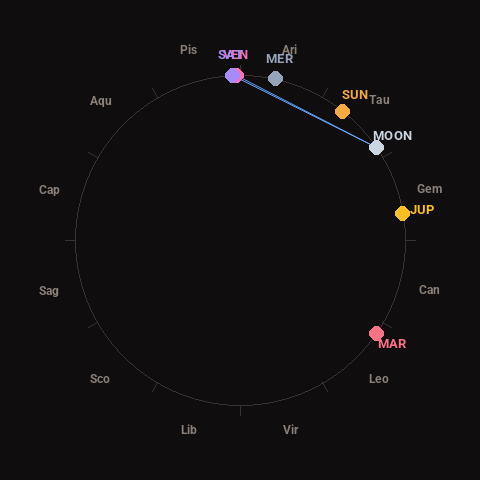
Moon: New Moon (2% illuminated), in Taurus.
Notable planetary angles: Venus conjunct Saturn (1°), Moon sextile Saturn (58°), Moon sextile Venus (57°).
Concurrent space weather: planetary Kp index 0.3; strongest recent solar flare: nothing notable.
This is a factual snapshot, not a claim of cause and effect – researchers are divided on whether lunar, planetary or solar factors influence seismic or weather activity. It’s included so readers can track the pattern for themselves over time.