
The U.S. State Department has raised its travel advisory for North Korea to Level 4: Do Not Travel, the highest warning level it issues. The advisory cites the continuing serious risk of arrest, long-term detention, and wrongful detention of U.S. citizens in the Democratic People’s Republic of Korea (DPRK).
Level 4 is reserved for countries where the U.S. government believes travelers face life-threatening risks and where consular assistance may be extremely limited or unavailable. In North Korea’s case, the U.S. has no diplomatic presence in the country, meaning there is no U.S. embassy to help if an American is detained or in trouble.
The advisory also reaffirms a key restriction that has been in place for several years: U.S. passports are not valid for travel to, in, or through North Korea unless they receive a special validation from the Secretary of State. These validations are granted only in very limited circumstances, typically for compelling humanitarian or national-interest reasons.
Who is affected
This advisory applies to all U.S. citizens and U.S. passport holders. Dual nationals of other countries may be subject to different rules, but the State Department still warns strongly against travel to the DPRK. Journalists, aid workers, and tour participants who might otherwise consider organized trips should note that even carefully arranged travel has resulted in U.S. citizens being detained for extended periods in the past.
What readers should keep in mind
First, if you or someone you know has any travel plans involving North Korea, those plans should be reconsidered entirely; standard travel insurance and consular protections do not apply the way they would elsewhere. Second, if a family member is currently in North Korea or has been detained there, the State Department’s Bureau of Consular Affairs handles these cases, and Sweden serves as the U.S. protecting power in the DPRK for limited consular matters. Third, travelers transiting through the region should double-check itineraries, since even passing through North Korean territory or airspace on certain routes can create complications under the passport restriction.
For everyday readers, this advisory does not indicate an imminent new crisis; it formalizes and reinforces long-standing concerns about the treatment of foreign nationals, particularly Americans, by the DPRK government. The practical takeaway is straightforward: North Korea remains closed to lawful U.S. travel, and the risks of detention are considered severe enough to warrant the government’s strongest possible warning.
This information comes from the U.S. Department of State’s Bureau of Consular Affairs travel advisory system.
Frequently Asked Questions
Can I legally travel to North Korea as a U.S. citizen?
No. U.S. passports are not valid for travel to, in, or through North Korea unless specially validated by the Secretary of State, which is granted only in rare, exceptional cases.
What does Level 4: Do Not Travel actually mean?
It is the State Department's highest advisory level, signaling life-threatening risks to travelers and the likelihood that the U.S. government cannot provide meaningful help if something goes wrong.
Why is detention the main concern in this advisory?
The State Department cites the continuing serious risk of arrest, long-term detention, and wrongful detention of U.S. citizens, based on past cases of Americans held by the DPRK for extended periods.
What if a family member is already in North Korea or has been detained?
Contact the State Department's Bureau of Consular Affairs. Sweden acts as the U.S. protecting power in North Korea and provides very limited consular assistance since the U.S. has no embassy there.
Keep tracking this:
Source: U.S. Department of State
Related Reading
Sky & Solar Conditions at the Time
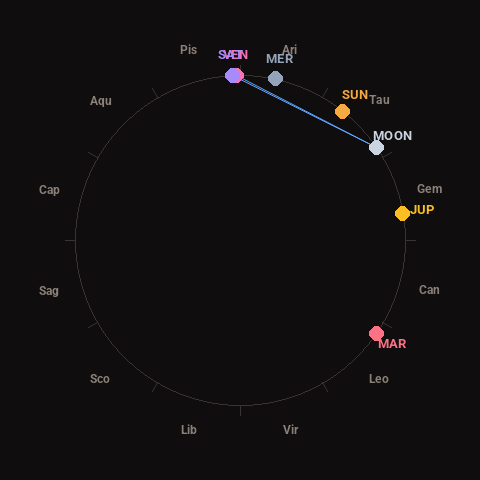
Moon: New Moon (2% illuminated), in Taurus.
Notable planetary angles: Venus conjunct Saturn (1°), Moon sextile Saturn (58°), Moon sextile Venus (57°).
Concurrent space weather: planetary Kp index 0.3; strongest recent solar flare: nothing notable.
This is a factual snapshot, not a claim of cause and effect – researchers are divided on whether lunar, planetary or solar factors influence seismic or weather activity. It’s included so readers can track the pattern for themselves over time.