
Phoenix Sky Harbor International Airport (PHX) is under a ground stop due to storms in the area, meaning flights headed to Phoenix are being held at their departure airports and arrivals into PHX are paused or heavily delayed. This is a large-scale flight disruption affecting one of the busiest airports in the Southwest, and ripple effects are likely at connecting airports across the country.
A ground stop is a traffic-management tool used by the Federal Aviation Administration when weather or other conditions make it unsafe or impractical to keep arrivals flowing. It does not mean the airport is closed permanently or that anything is wrong beyond the weather. Stops are typically lifted in stages once conditions improve, though delays often linger for hours as airlines work through backed-up aircraft and crews.
Who is affected: Passengers flying into, out of, or connecting through Phoenix today should expect delays, gate holds, and possible cancellations. Travelers at other airports whose flights were scheduled to land in Phoenix may be held at their origin. Pickups and drop-offs at PHX may also run behind schedule.
What you might notice: Departure boards showing growing delay times, flights stuck on tarmacs at other cities, and rebooking lines forming at PHX. Some inbound flights may divert to alternate airports such as Tucson or Las Vegas if the stop stretches on.
What to do if you’re traveling
1. Check your flight status before leaving for the airport. Use your airline’s app or website for the fastest updates, and sign up for text or push alerts. If your flight is canceled, rebooking through the app is usually much faster than waiting in line at the airport.
2. Know your options. During weather-related disruptions, most U.S. airlines will rebook you at no charge, and some may offer meal or hotel vouchers depending on the situation and length of delay. If your trip is flexible, ask about waivers letting you move to a later date without fees.
3. Build in buffer time. Even after the ground stop lifts, expect residual delays through the evening as schedules reset. If you’re picking someone up, track their actual flight rather than the scheduled arrival time.
Weather-related ground stops are routine and are issued specifically to keep passengers safe while storms pass. Conditions in Phoenix will be monitored and the stop adjusted as the weather evolves. Data on this event comes from FAA air traffic status reporting and National Weather Service (NWS) storm information for the Phoenix area.
Frequently Asked Questions
Is Phoenix Sky Harbor closed?
No. A ground stop means arriving flights are being held or delayed due to storms, not that the airport has shut down. Operations typically resume once the weather improves, though delays can linger afterward.
My flight to Phoenix was delayed at another airport — is that related?
Very likely yes. During a ground stop, the FAA holds Phoenix-bound flights at their departure airports so they don't stack up in the air waiting to land.
Will my flight be canceled, or just delayed?
Most flights during a weather ground stop are delayed rather than canceled, but cancellations can happen if the stop lasts several hours or crews time out. Check your airline's app for the most current status on your specific flight.
Can I get rebooked or refunded because of this?
Airlines generally rebook passengers for free during weather disruptions, and many offer travel waivers letting you change dates without fees. Refunds are typically available if your flight is canceled and you choose not to travel.
Keep tracking this:
Source: KTAR News 92.3 FM
Sky & Solar Conditions at the Time
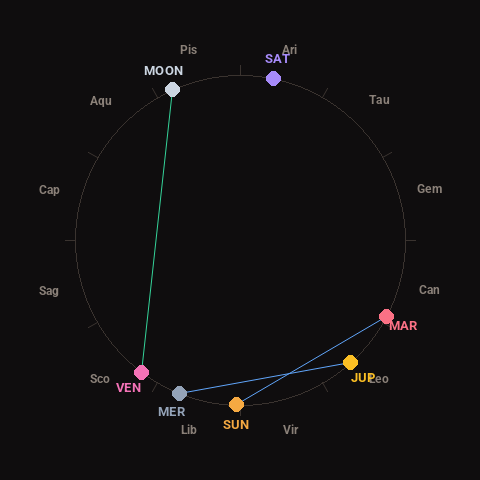
Moon: Waxing Gibbous (95% illuminated), in Pisces.
Notable planetary angles: Moon trine Venus (119°), Mercury sextile Jupiter (63°), Sun sextile Mars (64°).
Concurrent space weather: planetary Kp index 4.3; strongest recent solar flare: nothing notable.
This is a factual snapshot, not a claim of cause and effect – researchers are divided on whether lunar, planetary or solar factors influence seismic or weather activity. It’s included so readers can track the pattern for themselves over time.