
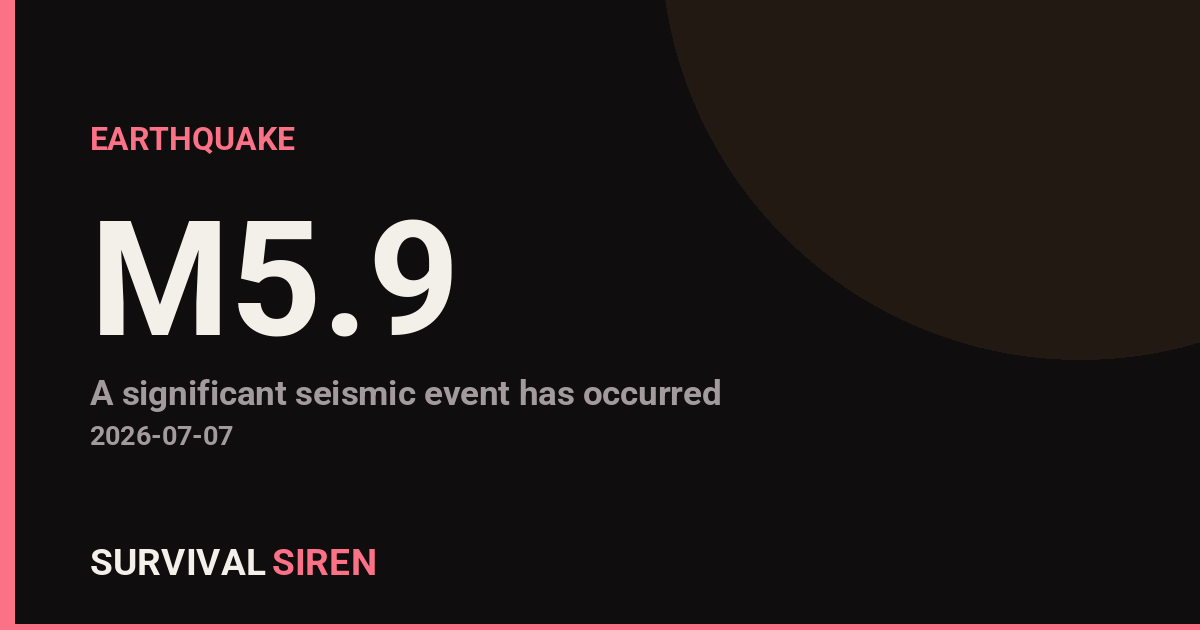
A magnitude 5.9 earthquake occurred in Drake Passage early today at a depth of approximately 10 kilometers, according to the U.S. Geological Survey. Drake Passage, located between South America’s Cape Horn and Antarctica’s South Shetland Islands, is a remote but seismically active region where the Pacific and Atlantic Oceans meet.
Drake Passage sits along the boundary where the Scotia tectonic plate meets the South American plate. Earthquakes in this zone are relatively common, though most occur far from population centers. This particular event would have been felt in nearby research stations and by vessels in the area, but poses no tsunami threat to distant coastlines based on current monitoring.
What You Might Notice
If you’re stationed in Antarctica or aboard a research vessel near Drake Passage, you would have felt noticeable shaking. Residents of southern Chile and Argentina may have experienced minor tremors, depending on local distance and geology. The broader global impact is minimal, as the region has very limited infrastructure.
Who is Affected: Primarily Antarctic research stations, oceanographic vessels, and passing maritime traffic. The remote location means civilian populations experience little to no direct impact.
Practical Watch Items
1. Monitor seismic activity patterns: Drake Passage experiences frequent earthquakes. If you track seismic data for scientific or professional reasons, note that increased activity in subduction zones can occasionally precede larger events, though prediction remains uncertain.
2. Review maritime weather communications: If you work or travel in southern ocean waters, ensure your vessel maintains updated weather and seismic alert systems through NOAA broadcasts.
3. Stay informed on regional geology: Understanding which areas sit on active plate boundaries helps contextualize seismic news and separate routine activity from genuine hazards.
For live seismic monitoring and space weather tracking, visit the SurvivalSiren dashboard at https://survivalsiren.com/spaceweather/feed.html, which sources data from NOAA and the USGS.