
A minor geomagnetic storm is underway right now. The Planetary Kp index — a global measure of how disturbed Earth’s magnetic field is — has reached 5.0, which the National Oceanic and Atmospheric Administration (NOAA) classifies as a G1, or minor, geomagnetic storm. This is the lowest level on NOAA’s five-step G-scale and is a fairly common occurrence, typically happening hundreds of times over an 11-year solar cycle.
The most noticeable effect for most people will be the aurora. At Kp 5.0, the northern lights may be visible across high latitudes, including northern-tier US states such as Washington, northern Idaho, Montana, North Dakota, Minnesota, Wisconsin, northern Michigan, and Maine, as well as Scotland, Scandinavia, and most of Canada. If skies are clear and dark and you live in one of these regions, it is worth stepping outside after nightfall and looking north — auroras are often faint to the naked eye at this level but show up well in phone camera photos.
Other possible impacts are limited and mostly behind the scenes. Power grid operators may see minor voltage fluctuations, though G1 storms very rarely cause outages. Satellite operators may make small adjustments to spacecraft operations, and there can be some effects on migratory animals, which navigate partly using Earth’s magnetic field.
What to watch for
Aurora viewing: If you are in a northern-tier state or northern Europe, check your local cloud forecast and find a dark spot away from city lights. Auroras are most likely between roughly 10 p.m. and 2 a.m. local time.
No action needed for most people: A G1 storm does not require any preparedness steps. You do not need to unplug electronics or worry about your home’s power — utilities monitor these conditions routinely.
If conditions strengthen: The Kp index can rise or fall over hours. If it climbs to Kp 6 or higher (a G2 storm), aurora visibility would extend farther south. Checking an updated forecast tonight will tell you whether the show is likely to improve or fade.
Data for this alert comes from NOAA’s Space Weather Prediction Center, which monitors geomagnetic conditions in real time.
Frequently Asked Questions
Can I see the northern lights tonight?
Possibly, if you are in a northern-tier US state, Canada, Scotland, or Scandinavia and skies are clear and dark. At Kp 5.0 the aurora is usually faint to the naked eye, so try looking north away from city lights, and use your phone camera, which often picks up the glow.
Will this storm knock out my power or damage my electronics?
That is very unlikely. G1 storms can cause only minor voltage fluctuations that power utilities manage routinely, and they do not pose a risk to household electronics.
How long will this geomagnetic storm last?
G1 conditions typically persist for several hours and can come and go as solar wind conditions change. The Kp index is updated continuously, so conditions may strengthen or weaken through the night.
Is this dangerous to people or animals?
No — a G1 storm poses no direct health risk to people. Migratory animals that navigate using Earth's magnetic field can be mildly affected, but for humans the main effect is a possible aurora display.
Keep tracking this:
Source: NOAA Space Weather Prediction Center
Sky & Solar Conditions at the Time
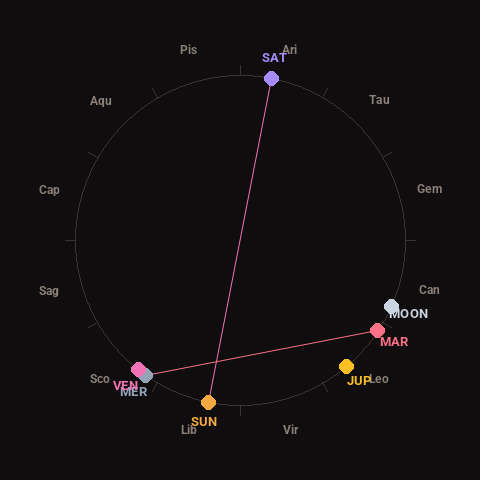
Moon: Last Quarter (39% illuminated), in Cancer.
Notable planetary angles: Sun opposite Saturn (180°), Mercury square Mars (91°), Mercury conjunct Venus (3°).
Concurrent space weather: planetary Kp index 5.0; strongest recent solar flare: nothing notable.
This is a factual snapshot, not a claim of cause and effect – researchers are divided on whether lunar, planetary or solar factors influence seismic or weather activity. It’s included so readers can track the pattern for themselves over time.