
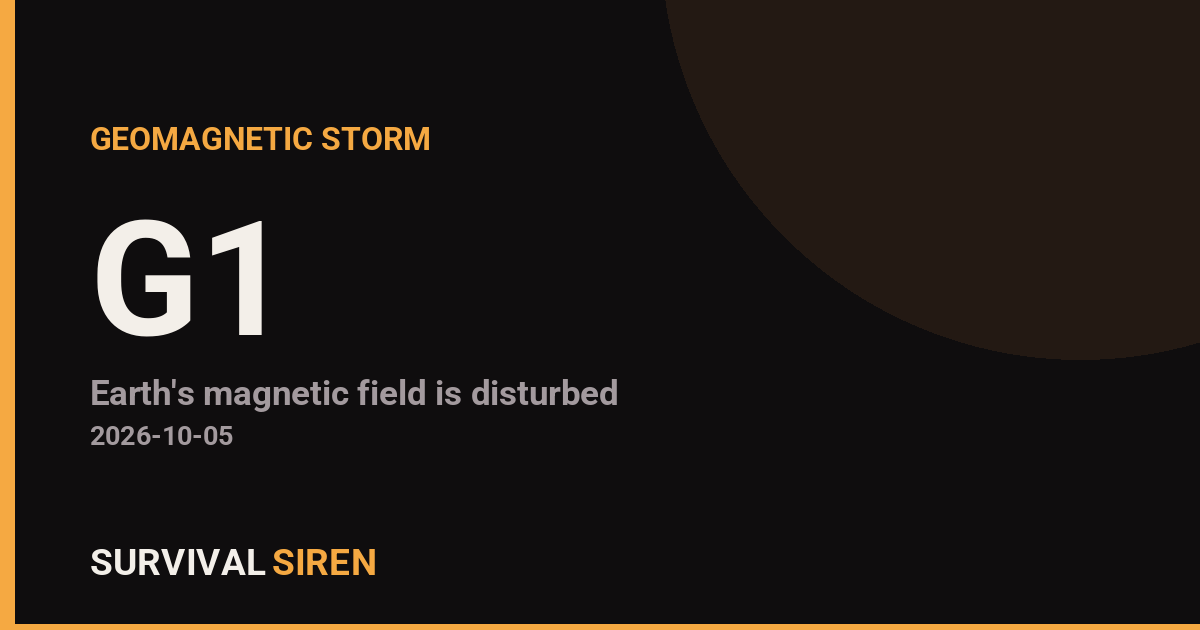
NOAA’s Space Weather Prediction Center reports that a G1 (Minor) geomagnetic storm is currently in progress, with the planetary Kp index reaching 5.3. The Kp index is a 0–9 scale that measures disturbances in Earth’s magnetic field caused by solar wind. A reading of 5.3 sits just past the G1 threshold, making this the weakest category on NOAA’s five-level geomagnetic storm scale.
For most people, the most noticeable effect will be the aurora borealis (northern lights). At this storm level, aurora is likely visible at high latitudes — including northern-tier U.S. states such as Minnesota, North Dakota, Montana, Maine, Michigan, and Washington — as well as Canada, Scotland, and Scandinavia. If skies are clear and you’re away from city lights, tonight could offer a good viewing opportunity after dark.
What this means on the ground
G1 storms are routine — Earth typically experiences dozens each solar cycle — and the practical impacts are limited. Power grid operators may see minor voltage fluctuations, and satellite operators sometimes make small adjustments to protect equipment, but everyday electronics, cell phones, and home power are not expected to be affected. NOAA also notes that migratory animals that navigate using Earth’s magnetic field can be affected, though this is a scientific observation rather than a public concern.
Who’s affected: primarily skywatchers at northern latitudes (in a good way), plus grid and satellite operators who monitor these conditions as part of normal operations. There is no reason for the general public to take protective action.
Sensible watch-items: If you’re in a northern state, check cloud cover forecasts and find a dark location facing north for aurora viewing — activity can strengthen or fade within hours. If you operate sensitive equipment (amateur radio, precision GPS survey gear), be aware of occasional signal quirks. Otherwise, simply keep an eye on updates, as geomagnetic conditions can escalate or subside as solar wind changes.
Data for this alert comes from NOAA’s Space Weather Prediction Center, which monitors geomagnetic activity in real time.
Frequently Asked Questions
Will this geomagnetic storm knock out my power or internet?
That's very unlikely. G1 is the weakest storm category, and its effects on power grids are limited to minor voltage fluctuations that utilities manage routinely — no outages are expected from a Kp 5.3 event.
Can I see the northern lights from where I live?
At G1 strength, aurora is realistic for northern-tier states like Minnesota, North Dakota, Montana, and Maine, plus Canada, Scotland, and Scandinavia. You'll need dark, clear skies and a good view toward the northern horizon.
Is this storm dangerous to my health or my phone?
No. Earth's atmosphere shields us completely, and geomagnetic storms pose no direct health risk. Personal electronics like phones and laptops are not affected at G1 levels.
Could this storm get stronger?
Geomagnetic conditions can shift over hours as solar wind changes, so NOAA's Space Weather Prediction Center updates the Kp index regularly. If activity escalates to G2 or higher, additional alerts would be issued.
Keep tracking this:
Source: NOAA Space Weather Prediction Center
Sky & Solar Conditions at the Time
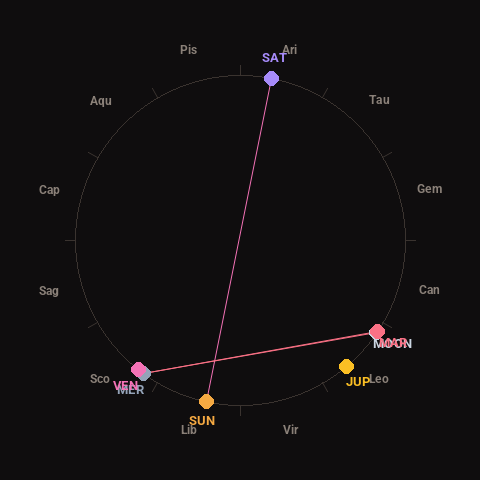
Moon: Last Quarter (31% illuminated), in Leo.
Notable planetary angles: Moon conjunct Mars (0°), Sun opposite Saturn (179°), Moon square Mercury (92°), Mercury square Mars (92°).
Concurrent space weather: planetary Kp index 5.3; strongest recent solar flare: nothing notable.
This is a factual snapshot, not a claim of cause and effect – researchers are divided on whether lunar, planetary or solar factors influence seismic or weather activity. It’s included so readers can track the pattern for themselves over time.