
Satellites monitoring the Sun have detected a moderate M1.1-class solar flare that peaked at 18:48 UTC on October 5, 2026. The flare was measured at an X-ray flux of 1.1e-5 watts per square meter, which puts it at the lower end of the ‘M’ (medium) category – the second-strongest class of solar flares, but still far below the major X-class events that cause significant disruption.
Because the flare’s radiation reached Earth at the speed of light, its most immediate effect was already felt the moment it happened: a possible brief shortwave (high-frequency) radio blackout on the sunlit side of Earth, rated at roughly R1 on the five-level radio-blackout scale. R1 is the weakest level. At this level, the effects are minor – shortwave radio users on the daylit side may have noticed weak or fading signals for a short period, and low-frequency navigation signals can briefly degrade. Most people will not have noticed anything at all.
Who might be affected? Mainly shortwave radio operators, some aviation and maritime radio users, and anyone relying on HF radio communications. Everyday services – cell phones, television, internet, and power – are not affected by a flare of this size.
What to watch over the next 1-3 days
Solar flares themselves are short-lived, but they are sometimes accompanied by a coronal mass ejection (CME) – a large burst of solar material that, if aimed at Earth, can trigger a geomagnetic storm one to three days later. That is the real thing to watch here. A moderate geomagnetic storm can, at most, cause minor fluctuations in power grids, some satellite hiccups, and auroras visible farther from the poles than usual.
Sensible steps for readers: first, check space-weather forecasts over the next couple of days to see whether a CME is heading our way and how the Kp index (a simple 0-9 measure of geomagnetic activity) is trending. Second, if you rely on shortwave radio or HF communications for work or hobby, expect possible brief interruptions and have a backup channel in mind. Third, there is no need to change daily plans – this is a routine space-weather event of modest size, and monitoring agencies will issue follow-up alerts if conditions escalate.
Data for this alert comes from NOAA’s Space Weather Prediction Center and its GOES satellite measurements.
Frequently Asked Questions
Will this solar flare knock out my power or cell phone?
No. An M1.1 flare is moderate and only causes brief, minor shortwave radio blackouts on Earth's sunlit side. Power grids and cellular networks are not affected by a flare of this size.
I use shortwave radio – what should I expect?
You may have noticed weak or faded HF signals for a short time around the peak at 18:48 UTC, consistent with a minor R1-level radio blackout. These effects are temporary and resolve on their own.
Could anything bigger follow this flare?
Possibly. If the flare launched a coronal mass ejection toward Earth, a geomagnetic storm could arrive in 1-3 days. Watch the Kp index and NOAA forecasts for updates.
Will there be northern lights from this?
Not from the flare itself, but if a CME follows and produces a geomagnetic storm, auroras could become visible at lower latitudes than usual in the coming days.
Keep tracking this:
Source: NOAA GOES X-ray Flux
Sky & Solar Conditions at the Time
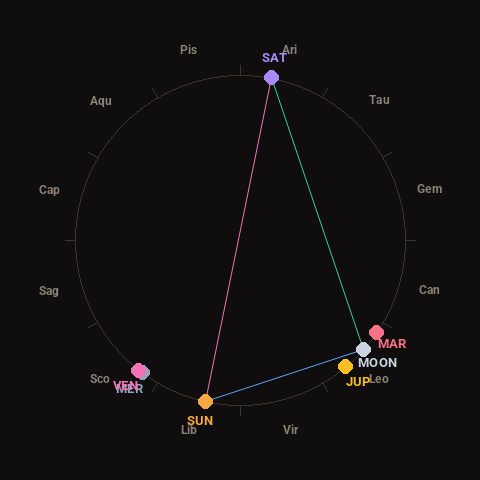
Moon: Waning Crescent (26% illuminated), in Leo.
Notable planetary angles: Moon trine Saturn (121°), Sun sextile Moon (61°), Sun opposite Saturn (179°), Mercury conjunct Venus (2°).
Concurrent space weather: planetary Kp index 3.7; strongest recent solar flare: M1.1-class.
This is a factual snapshot, not a claim of cause and effect – researchers are divided on whether lunar, planetary or solar factors influence seismic or weather activity. It’s included so readers can track the pattern for themselves over time.