
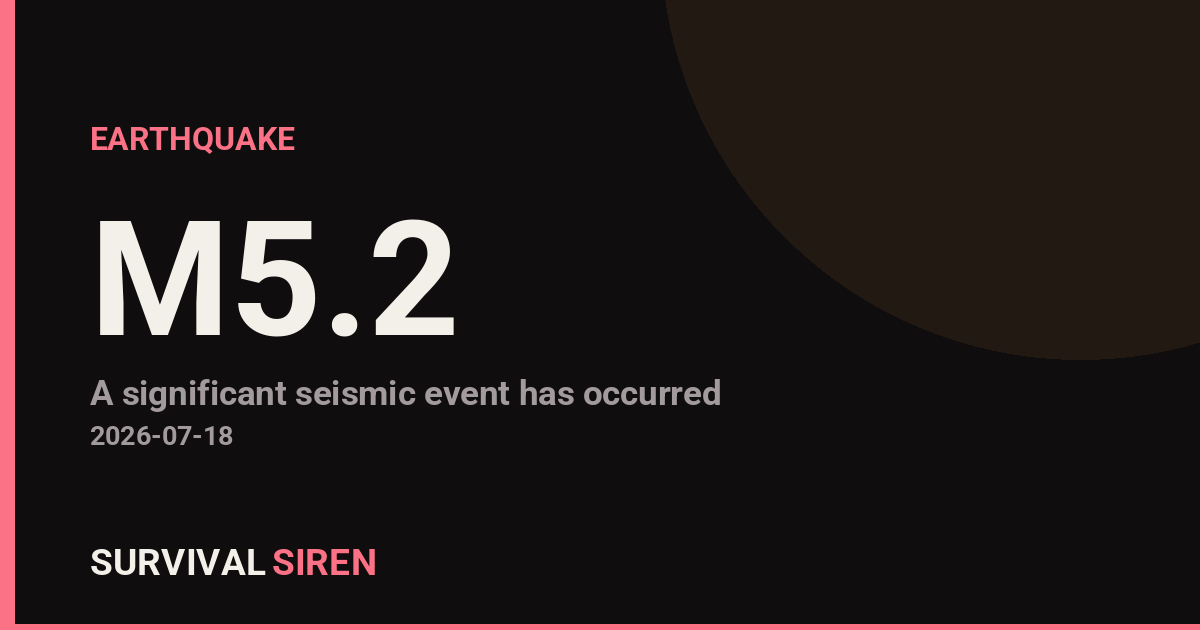
A moderate earthquake with a magnitude of 5.2 struck approximately 69 kilometers southwest of Puerto Madero, Mexico, at a depth of roughly 45 kilometers, according to the U.S. Geological Survey (USGS). The quake occurred in the Pacific Ocean off Mexico’s southern coast in Chiapas state.
Earthquakes of this magnitude typically produce noticeable shaking across a regional area. People in Puerto Madero and nearby coastal communities likely felt the tremor, with some possible minor to light damage in older or poorly constructed buildings. The depth of 45 kilometers—considered moderate—means the shaking was distributed across a broader area rather than concentrated near the epicenter.
What You Might Notice
If you’re in the affected region, you may have experienced swaying motion lasting 10-20 seconds, rattling dishes or objects on shelves, or minor disruptions to utilities. Coastal areas should monitor local emergency management alerts for any tsunami advisories, though earthquakes at this magnitude and depth typically pose minimal tsunami risk.
Who Is Affected
The primary impact zone includes Puerto Madero and surrounding communities in southern Chiapas. People in Tapachula, Tonalá, and other nearby towns may have felt lighter shaking. This region sits along the Middle America subduction zone, making earthquakes relatively common in the area.
Practical Preparedness Reminders
1. Know your safe spots: Identify sturdy tables or interior walls in your home where you can shelter during shaking—this remains the most effective response during an earthquake.
2. Secure heavy items: If you haven’t already, anchor tall furniture, water heaters, and shelving units to walls to prevent tipping during future quakes.
3. Stay informed: Keep local emergency alerts enabled on your phone and bookmark your region’s official earthquake and tsunami warning resources.
For ongoing space weather and geological event monitoring, visit the live dashboard at https://survivalsiren.com/spaceweather/feed.html, where we track alerts from NOAA and the USGS.
Source: USGS