
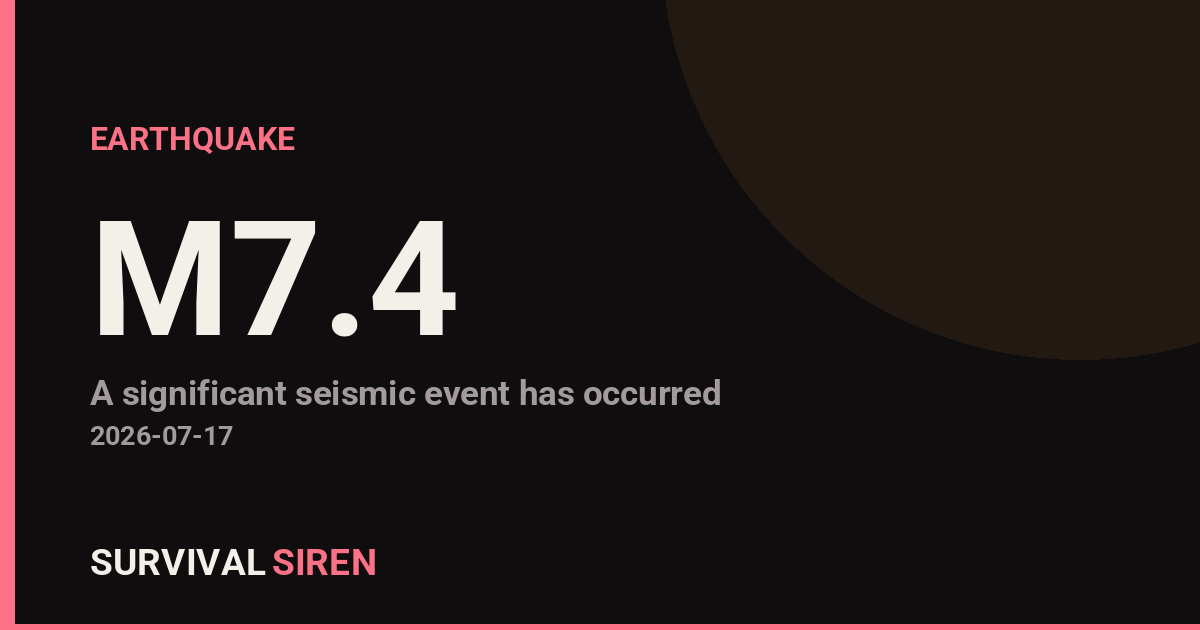
A magnitude 7.4 earthquake struck the Pacific Ocean approximately 71 kilometers west-southwest of Puerto Madero, Mexico at 10 km depth, according to the U.S. Geological Survey. This is a major earthquake capable of causing significant damage in nearby coastal areas.
Earthquakes of this magnitude typically produce strong ground shaking over a wide area. People in Puerto Madero, nearby Chiapas communities, and along Mexico’s Pacific coast may have felt substantial shaking. Given the offshore location and depth, authorities are monitoring for potential tsunami activity affecting coastal regions of Mexico, Guatemala, and Central America.
What to Watch For
Tsunami alerts: Check official channels from Mexico’s National Center for Disaster Prevention (CEPC) and the Pacific Tsunami Warning Center. If you’re in a coastal zone, move to higher ground if a tsunami warning is issued—don’t wait for instructions if you felt strong shaking near the ocean.
Aftershocks: Earthquakes this size often trigger aftershocks ranging from moderate to significant over the coming hours and days. Expect continued ground movement and use the same safety precautions (sturdy doorway, away from windows, low and covered if possible).
Infrastructure impacts: Monitor local news for reports on damage to roads, bridges, utilities, and emergency services. If you’re in the affected region, charge devices now and keep emergency supplies accessible.
For those outside the immediate area, this is a good reminder to review your household earthquake plan: identify safe spots in each room, secure heavy furniture, and ensure your emergency kit includes water, first aid supplies, and a battery-powered radio.
Live space weather and seismic monitoring data is available through NOAA at https://survivalsiren.com/spaceweather/feed.html.
Source: USGS