
A 911 call from a trailhead can mean a wait of hours, not minutes, and that single fact is the entire reason wilderness medicine exists as a distinct discipline rather than a subset of ordinary first aid. Urban emergency medicine is built around the assumption that definitive care arrives quickly. Take away that assumption, and nearly every protocol taught in a standard first aid class has to be rewritten around a harder question: what do you do when the ambulance is not fifteen minutes away but fifteen hours away, or simply cannot reach you at all.
A Discipline Built From Necessity
Wilderness medicine as a formal field is younger than most people assume. Backcountry travelers improvised remote care for as long as they have gotten hurt far from help, but the discipline was not codified until Stanford emergency physician Paul Auerbach and colleague Edward Geehr published the first comprehensive wilderness medicine textbook in 1983, an effort that led directly to the founding of the Wilderness Medical Society two years later. That distinction matters because it explains why wilderness protocols so often contradict the standard emergency care most people learn in a weekend CPR class. Standard protocols are optimized for speed to a hospital. Wilderness protocols are optimized for prolonged field care, sometimes over days rather than hours, and that difference in time horizon changes almost every clinical decision that follows.
Assessment Comes Before Treatment, Every Time
The instinct in a crisis is to treat the most visible injury first, and that instinct is frequently wrong. Wilderness first aid training teaches a structured primary assessment, checking airway, breathing, circulation, and level of consciousness in that specific order, because a person can look stable while quietly dying of an airway obstruction or internal bleeding that has not yet produced visible symptoms. Only after that primary survey is complete does a responder move to the secondary assessment, a head-to-toe exam looking for the injuries that are not immediately obvious. Skipping this sequence to rush toward an obvious wound is one of the most common and most dangerous mistakes an untrained responder makes in the field.
Bleeding Control Is the Skill Most Likely to Save a Life
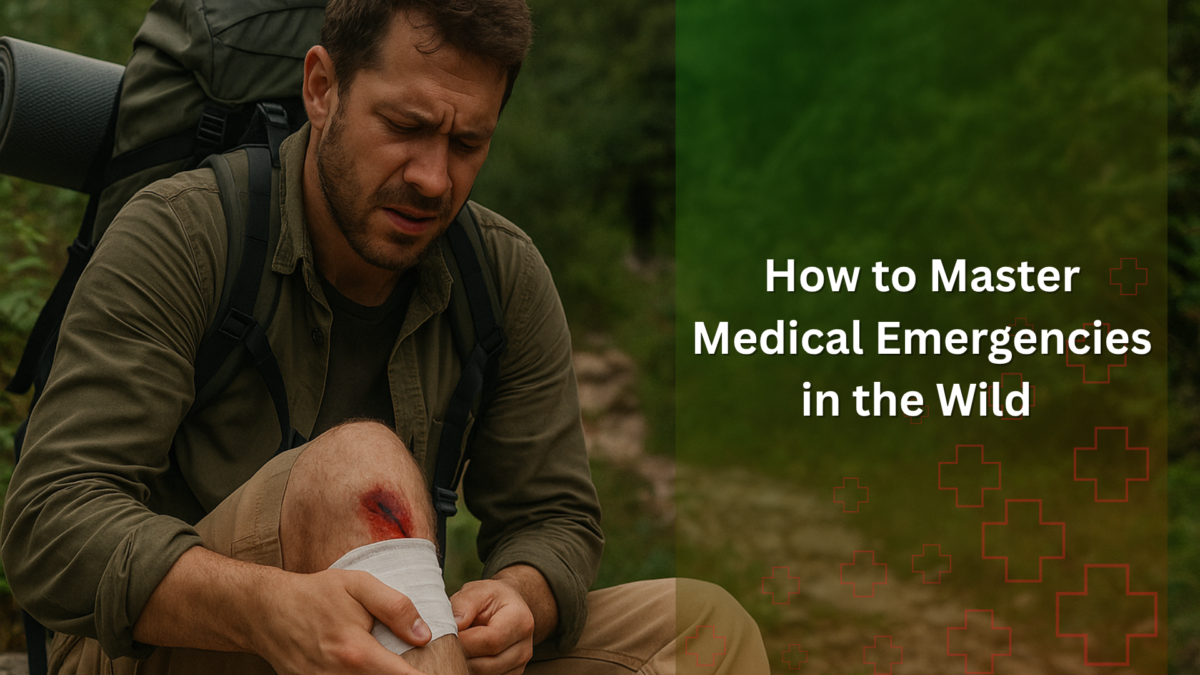
Uncontrolled hemorrhage kills faster than almost any other survivable injury, and the statistics on tourniquet use make an unusually blunt case for training. Since the national Stop the Bleed campaign launched in 2015, more than 4 million people across 138 countries have completed the course, and the results hold up under scrutiny. A systematic review and meta-analysis covering 36 trials and more than 11,000 trainees found that correct-use scores for tourniquet application rose from a 2 percent pass rate before training to 96 percent afterward. Among people who later applied that training to a real casualty, the outcomes were overwhelmingly positive. Direct pressure remains the first response to any bleeding wound, but for a wound on a limb that direct pressure cannot control, a properly applied tourniquet, placed two to three inches above the wound and tightened until bleeding stops, is the single intervention most likely to change whether a person survives long enough to reach definitive care.
Wound Care Is Not Optional Once Bleeding Stops
Once hemorrhage is controlled, infection becomes the next real threat, and it is one that unfolds over days rather than minutes, which is exactly the timeline wilderness settings are worst equipped to handle. The Wilderness Medical Society’s guidance calls for high-pressure irrigation, in the range of 6 to 15 psi, to flush bacteria and debris out of an open wound, though research has also found that improvised low-pressure irrigation, using a punctured water bottle cap or a hydration bladder, produces no measurable increase in complication rates when better equipment is not available. The detail that actually matters most is timing: the sooner a wound is irrigated after the injury occurs, the lower the eventual infection risk, and a liter of clean water is generally enough for most wounds encountered on a trail. Any wound exposing deep tissue, showing spreading redness, or losing sensation below the injury site is a signal to evacuate rather than continue treating in the field.
Spinal Injuries Have Quietly Changed How They Are Treated
One of the more significant shifts in wilderness medicine over the past decade has been the near-total abandonment of rigid cervical collars in the backcountry, a reversal of what many people were taught only a few years ago. Research comparing improvised and standard collars found no documented case in which failing to place one caused harm, while a growing body of evidence shows the devices themselves can cause harm when applied incorrectly or left on for extended periods during a prolonged evacuation. The current approach for an alert, cooperative patient is simpler than it sounds: ask them to hold their head still and let them reposition themselves if capable, rather than forcing rigid immobilization onto someone who can protect their own spine more effectively than an improvised board can. For an unconscious or uncooperative patient, a soft improvised collar made from clothing, alongside gentle manual stabilization, remains the recommended middle ground.
Environmental Emergencies Move at Their Own Pace
Hypothermia and heat illness are the two environmental emergencies most likely to turn a routine trip into a genuine crisis, and both are treated primarily through prevention of further deterioration rather than aggressive field intervention. For hypothermia, the priority is insulating the person from further heat loss, handling them gently since rough movement can trigger a fatal cardiac arrhythmia in a severely cooled body, and never assuming someone without detectable vital signs is dead until they have been fully rewarmed, since profound hypothermia can mimic death closely enough to fool an untrained responder. Heat emergencies run in the opposite direction, and the line between heat exhaustion and heat stroke is the line between a recoverable condition and a medical emergency: altered mental status, confusion, or the cessation of sweating in someone overheated signals heat stroke, which requires aggressive cooling and rapid evacuation rather than rest in the shade.
Envenomation Guidance Keeps Evolving
Even settled areas of wilderness medicine continue to be revised as new evidence emerges. The Wilderness Medical Society issued an updated clinical practice guideline for pit viper envenomation in the United States and Canada in 2026, more than a decade after its previous version, incorporating new antivenom formulations that were not yet approved when the original guidance was written. The core field advice has held steady regardless: immobilize the affected limb below heart level, remove jewelry or tight clothing before swelling begins, and get the person to definitive antivenom treatment as quickly as possible. Cutting, sucking, or icing a snakebite wound, still recommended in decades-old folklore, does measurable harm and delays the only intervention that actually works.
Deciding Whether to Move or Wait
Perhaps the least intuitive skill in wilderness medicine is knowing when not to act. Field triage generally sorts into three categories: injuries requiring immediate evacuation by the fastest available means, such as uncontrolled bleeding, suspected spinal injury, or rapidly deteriorating mental status; injuries that can be walked or carried out at a measured pace, including stable fractures and controlled wounds; and injuries where movement itself causes more harm than staying put and signaling for rescue. That third category is the hardest for most people to accept in the moment, because the instinct in any emergency is to do something, and sitting still while help is summoned can feel like failure even when it is the correct clinical choice.
Training Levels Reflect the Stakes, Not Bureaucracy
The gap between a 16-hour Wilderness First Aid course and a 72-to-80-hour Wilderness First Responder certification is not administrative padding. The shorter course suits casual recreationalists on trips within a day or two of medical care, while the longer certification is aimed at guides, expedition leaders, and search-and-rescue volunteers operating far enough from help that extended patient management over multiple days becomes a realistic scenario rather than a hypothetical one. Neither course substitutes for professional medical care. Both exist because professional medical care, in the settings this article is actually about, is not always reachable in time, and the gap between injury and help is where a trained bystander does the work an ambulance crew would otherwise do.
None of this training matters if it stays theoretical. A tourniquet in a pack that nobody has practiced applying, or a spinal assessment nobody has rehearsed under stress, is not meaningfully different from having no training at all. The honest question worth asking before the next trip into the backcountry is not whether the gear list is complete, but whether the person carrying it has actually practiced using it under pressure.