
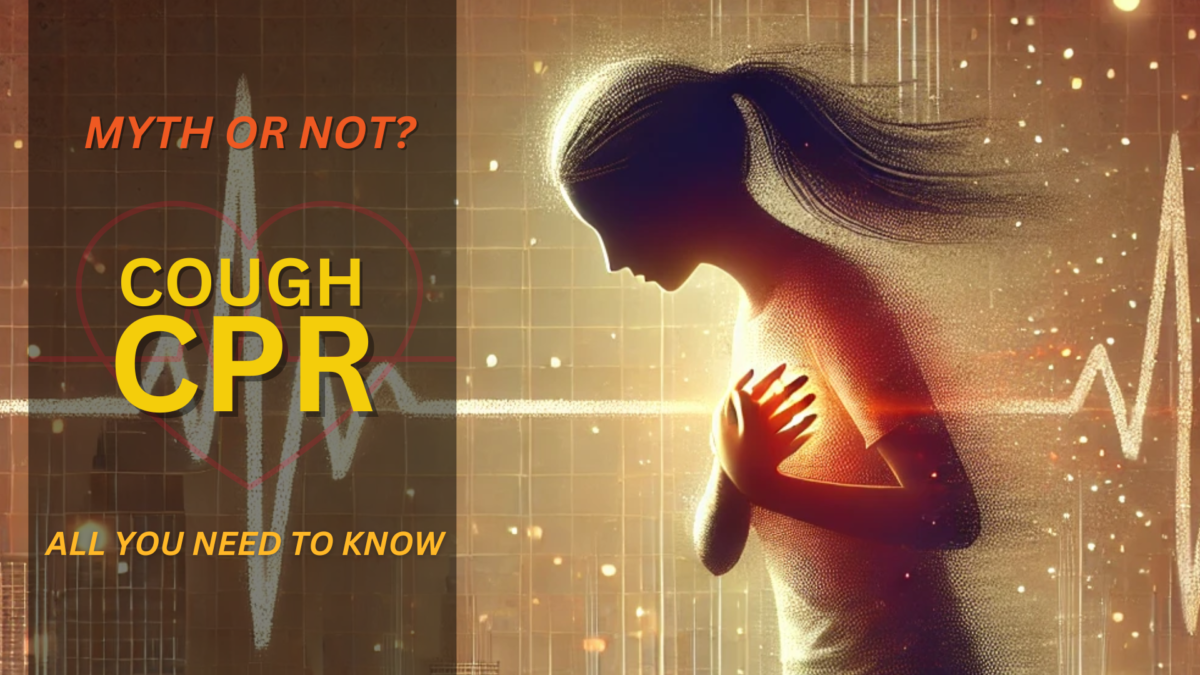
Somewhere on your phone right now, saved in a group chat or forwarded from a relative, there is probably a version of a message claiming that coughing hard and repeatedly can save your life during a heart attack if you are alone. It has been circulating in one form or another since 1999, and it is one of the most durable pieces of medical misinformation on the internet, resurfacing every few years on Facebook, WhatsApp, and now TikTok, dressed up each time as urgent, life-saving advice you need to memorize immediately. The advice is wrong, and understanding exactly why it is wrong matters more than dismissing it, because the confusion it creates can cost someone the minutes that actually determine survival.
Where the myth came from
The technique behind the myth is not entirely fictional. Cough CPR is a real, narrowly defined procedure used in cardiac catheterization labs, where a patient is already hooked up to monitoring equipment and a doctor or nurse coaches them to cough forcefully and rhythmically during a brief, medically induced arrhythmia. The coughing generates enough intrathoracic pressure to keep a small amount of blood moving to the brain, buying a few seconds of consciousness while clinicians correct the rhythm. It is a real technique, but it exists only inside a monitored hospital setting, performed under direct medical supervision, on a patient whose heart rhythm problem has already been identified and is being actively managed.
Sometime around 1999, that narrow clinical procedure got stripped of every one of those qualifiers and repackaged as a self-help trick for anyone having a heart attack alone at home. The chain email version claimed a person could cough their way through a heart attack until help arrived, effectively self-administering CPR. Snopes has tracked the claim back to that original 1999 email, and the core text has barely changed since, which is itself a clue to how thoroughly it has been debunked and re-debunked without actually dying out.
Why it does not work
The name itself is the first problem. CPR, cardiopulmonary resuscitation, is a procedure for someone whose heart has stopped beating entirely, in cardiac arrest. A person in cardiac arrest is unconscious within seconds and physically cannot cough on command. Calling the technique cough CPR is a contradiction, since by the time CPR would be needed, coughing is no longer possible.
A heart attack, meanwhile, is a different event entirely. It happens when blood flow to part of the heart muscle is blocked, usually by a clot, and the person having one is typically conscious, often for an extended period, with the classic symptoms of chest pressure, pain radiating to the arm or jaw, shortness of breath, or cold sweats. The American Heart Association has stated plainly that it does not endorse cough CPR for public use during a heart attack, and specifically warns that vigorous, self-directed coughing in this scenario can raise blood pressure and heart rate at exactly the moment the heart is already under strain, potentially making things worse rather than better. Neither the AHA nor the British Heart Foundation includes it in any lay-rescuer training, in part because folding it into standard CPR instruction risks confusing the two entirely different emergencies it is meant to address.
What actually improves the odds
The data on real interventions is stark by comparison. Bystander CPR performed on someone in actual cardiac arrest raises survival to hospital discharge from roughly 7.6 percent to 11.4 percent, and bringing an AED into the picture before emergency responders arrive pushes survival to about 15.5 percent overall, climbing past 33 percent in public settings where AEDs are more readily available. If a defibrillator shock is delivered within the first minute of collapse, survival odds approach 90 percent. Every one of those numbers depends on someone else, or a machine, intervening. None of them depend on the person in cardiac arrest doing anything themselves, because by definition they cannot.
For a heart attack specifically, where the person is still conscious, the single highest-value action is calling emergency services immediately, before doing anything else, including contacting a family member first. Mayo Clinic’s guidance is unambiguous on sequencing: call for help first, do not attempt to drive yourself to a hospital, and follow whatever instructions the dispatcher provides once connected, since trained dispatchers can now talk callers through steps in real time and are positioned to get responders moving before you even finish describing your symptoms. The American Heart Association has also walked back its earlier blanket advice to chew an aspirin during a suspected heart attack; that decision is now something the 911 dispatcher will guide you through, since it depends on allergy history and other risk factors better assessed over the phone than guessed at alone.
Recognizing the symptoms in the first place is its own hurdle, particularly for women, whose heart attacks more often present as shortness of breath, nausea, back or jaw pain, and extreme fatigue rather than the textbook crushing chest pain associated with men. That gap in recognition is not trivial. Roughly 30 percent of heart attacks occur in women, and women are statistically more likely than men to die from one, largely because their symptoms are dismissed or misattributed for longer before treatment begins.
The real lesson is about triage, not coughing
The persistence of cough CPR for over two decades says less about gullibility and more about a genuine gap in public understanding between a heart attack and cardiac arrest, two related but distinct emergencies that call for entirely different responses. A heart attack calls for immediate emergency contact and staying as calm and still as possible while help is dispatched. Cardiac arrest calls for CPR and an AED from someone else, because the person experiencing it cannot act on their own behalf at all. Neither scenario is improved by coughing, and treating a life-threatening cardiac event as something you can self-treat with a home remedy delays the one intervention that actually moves survival statistics: getting a trained responder or a defibrillator to the scene as fast as possible.
The next time this message resurfaces in a group chat, forwarding a correction takes less effort than the original hoax did to write. Given how many other pieces of unverified medical advice circulate the same way, what other well-intentioned survival tips in your own emergency plan have you actually checked against a primary medical source?