
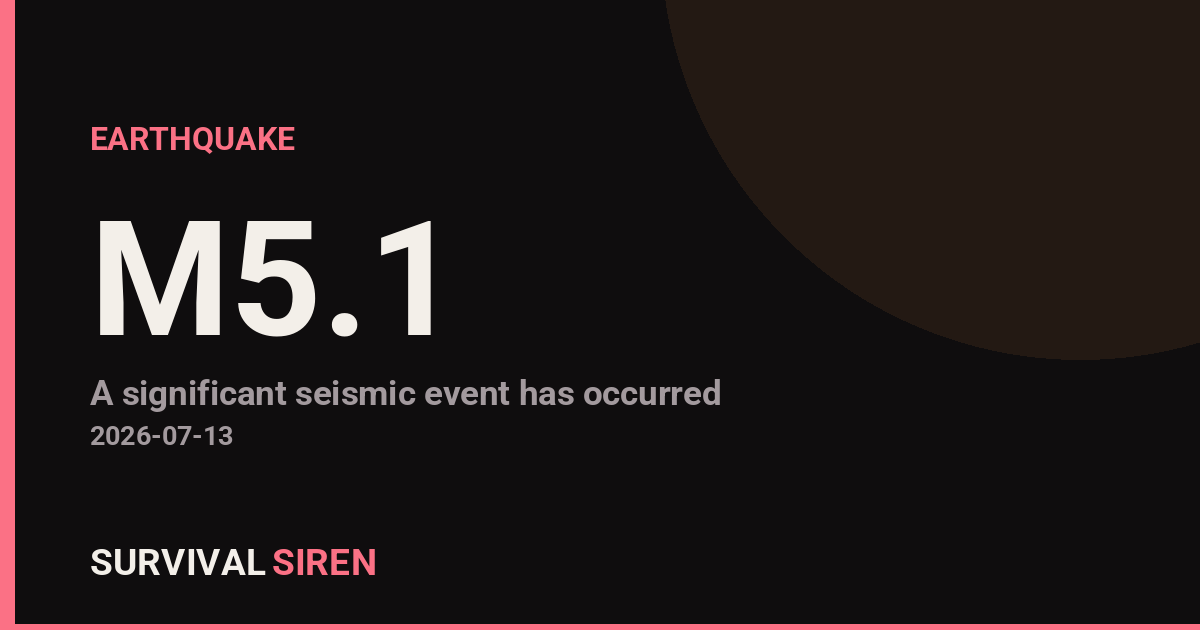
A magnitude 5.1 earthquake occurred southeast of the Loyalty Islands (located east of New Caledonia in the South Pacific) at approximately 10 kilometers depth, according to the U.S. Geological Survey. Earthquakes of this magnitude typically produce noticeable shaking in areas near the epicenter and can cause minor damage to buildings.
Residents and visitors in the immediate region—particularly across nearby island communities and parts of New Caledonia—likely felt this shaking. The depth of 10 kilometers is relatively shallow, which generally means the energy reaches the surface more directly. However, the remote location of this earthquake in the Pacific reduces the number of people in the immediate impact zone compared to similar-magnitude quakes near populated areas.
What to Watch For
Local aftershocks: Earthquakes of this size are sometimes followed by smaller aftershocks over hours or days. Anyone in the region should remain alert for additional shaking and continue practicing basic earthquake safety—moving away from windows and securing loose items.
Tsunami potential: While magnitude 5.1 earthquakes rarely generate significant tsunamis, Pacific monitoring agencies routinely assess each event. If you’re in the South Pacific region, check official local alerts from your national weather or civil defense service for any coastal advisories.
Building inspections: Residents near the epicenter should do a basic visual check of their homes and structures for any new cracks or damage, even though significant structural damage is unlikely at this magnitude.
For those interested in earthquake preparedness more broadly, this is a good reminder to review your emergency kit, know your local evacuation routes, and secure heavy furniture in your home. The Pacific Ring of Fire remains one of Earth’s most seismically active zones, making preparedness a practical habit for residents across that region.
For ongoing updates on seismic activity and space weather events, visit the SurvivalSiren live dashboard at https://survivalsiren.com/spaceweather/feed.html.
Source: USGS
Related Reading
Sky Conditions at the Time
Moon: New Moon (1% illuminated), in Cancer.
Notable planetary angles: Sun conjunct Mercury (1°), Moon square Saturn (88°).
This is a factual snapshot, not a claim of cause and effect – researchers are divided on whether lunar, planetary or solar factors influence seismic or weather activity. It’s included so readers can track the pattern for themselves over time.
Earthquakes Within ~400 km, Past 30 Days
For context, here is other recent seismic activity in the surrounding region (M2.5+, via USGS):
| Date & Time (UTC) | Magnitude | Location |
|---|---|---|
| 2026-07-21 18:33 UTC | M5.1 | 7 km WNW of Kalbay, Philippines |
| 2026-07-18 02:23 UTC | M5.3 | 119 km SW of Sarangani, Philippines |
| 2026-07-17 16:12 UTC | M5.2 | 11 km SE of Kiupo, Philippines |
| 2026-07-16 05:55 UTC | M4.7 | 86 km SSW of Sarangani, Philippines |
| 2026-07-14 15:49 UTC | M6.2 | 32 km WSW of Sarangani, Philippines |
| 2026-07-14 13:15 UTC | M5.2 | 6 km NW of Nuing, Philippines |
| 2026-07-14 06:37 UTC | M4.4 | 191 km N of Tobelo, Indonesia |
| 2026-07-14 01:38 UTC | M4.6 | 34 km SE of Sarangani, Philippines |
| 2026-07-12 22:10 UTC | M4.4 | 167 km SSE of Sarangani, Philippines |
| 2026-07-12 00:43 UTC | M4.9 | 241 km NNW of Tobelo, Indonesia |
| 2026-07-11 17:49 UTC | M5.2 | 56 km SSW of Sarangani, Philippines |
| 2026-07-11 10:51 UTC | M5.4 | 41 km S of Sarangani, Philippines |
| 2026-07-11 00:47 UTC | M4.7 | 1 km SE of Batiano, Philippines |
| 2026-07-10 15:25 UTC | M4.4 | 1 km E of Caraga, Philippines |
| 2026-07-10 12:42 UTC | M4.5 | 7 km SE of Sarangani, Philippines |
| 2026-07-09 17:50 UTC | M4.5 | 59 km WSW of Balangonan, Philippines |
| 2026-07-09 16:36 UTC | M4.6 | 43 km SSW of Sarangani, Philippines |
| 2026-07-08 13:35 UTC | M4.3 | 85 km SW of Balangonan, Philippines |
| 2026-07-08 04:36 UTC | M4.3 | 43 km SW of Balangonan, Philippines |
| 2026-07-07 14:21 UTC | M4.5 | 172 km NNW of Tobelo, Indonesia |
Emergency number for Philippines: 911 (General guidance – always verify locally, as this can vary by region.)