
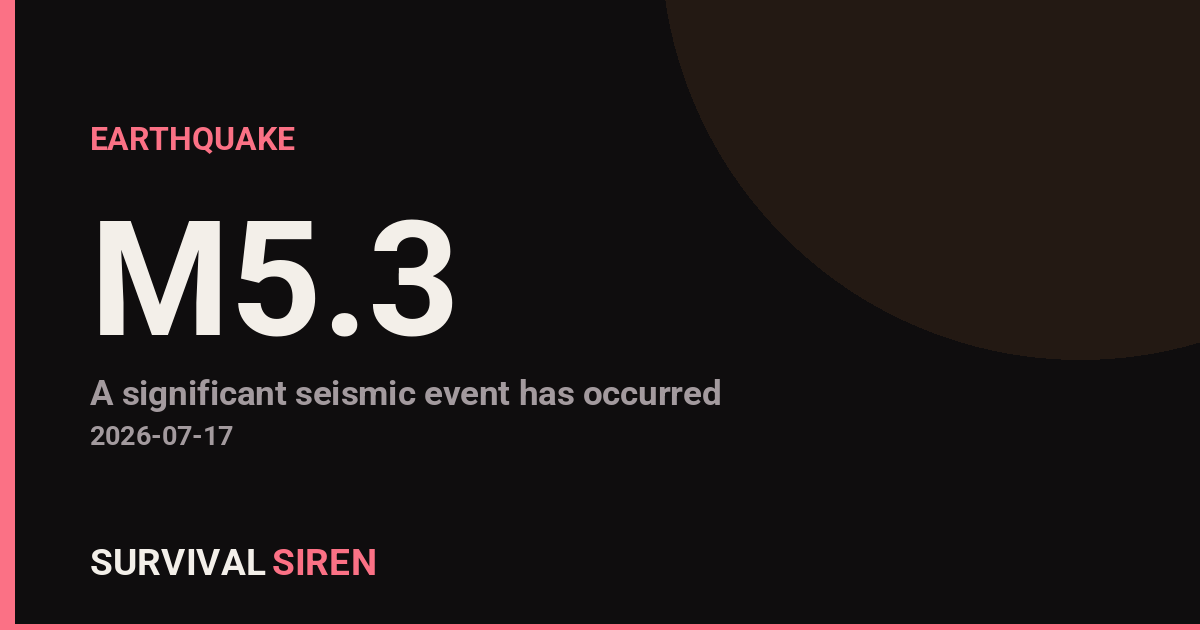
A magnitude 5.3 earthquake occurred 9 kilometers east-northeast of Pangyan, Philippines at a depth of approximately 66 kilometers, according to the U.S. Geological Survey. The moderate-strength quake struck at a depth considered relatively deep for this region, which typically reduces surface shaking intensity.
Residents within 50-100 kilometers of the epicenter likely felt noticeable shaking lasting 10-30 seconds. The Philippines Seismic Network confirmed no tsunami warning was issued, as earthquakes of this magnitude at this depth rarely generate significant ocean waves. Damage reports from the immediate area have not yet been confirmed.
This earthquake is part of normal seismic activity in the Philippines, which sits on the Pacific Ring of Fire—a zone where tectonic plates frequently interact. The country experiences hundreds of earthquakes annually, though most go unnoticed.
What to Watch For
Aftershocks: Moderate earthquakes often trigger smaller aftershocks in the following hours or days. These typically pose minimal additional risk but are worth monitoring if you’re in the region.
Structural assessments: If you live near Pangyan and experienced strong shaking, check buildings for visible damage—cracks in walls, fallen objects, or shifted furniture—which may indicate structural concerns worth having inspected.
Emergency kit readiness: This is a good reminder for all readers in earthquake-prone areas to verify your emergency supplies are accessible: water (1 gallon per person daily for 3+ days), non-perishable food, first aid supplies, flashlights, and battery-powered or hand-crank radios. Store these items where you can grab them quickly.
The Pacific Tsunami Warning Center and local Philippine authorities continue monitoring the situation. No further alerts are anticipated at this time based on current data.
For real-time seismic data and earthquake updates, visit the USGS Earthquake Hazards Program or check our space weather and natural hazards feed at https://survivalsiren.com/spaceweather/feed.html
Source: USGS