
A nationwide power outage struck Sri Lanka on Sunday, knocking out electricity across the entire island of roughly 22 million people for around six hours before restoration efforts brought the grid back online.
The Ceylon Electricity Board, the state-run utility, attributed the blackout to a failure at a substation south of Colombo, the capital. A fault at a single grid node cascaded through the national network, causing generating stations to trip offline one after another – a domino effect that engineers call a cascading failure. Officials said there was no indication of an external cause such as a geomagnetic storm; this appears to have been a conventional grid equipment failure.
What residents experienced
With the whole island affected, the outage disrupted daily life broadly: traffic lights went dark in Colombo, hospitals and essential services switched to backup generators, water pumping stations were interrupted in some areas, and businesses closed early. Mobile networks remained largely functional on battery backup, though service degraded in places as backup power ran down. Power was restored in phases, with priority given to hospitals and key infrastructure.
Sri Lanka has experienced prolonged outages before, including extended blackouts during its 2022 economic crisis, and its grid is considered vulnerable to single-point failures.
Practical pointers if you live in an outage-prone area:
– Keep phones and power banks charged, and have flashlights ready rather than candles to reduce fire risk.
– Keep refrigerator and freezer doors closed; food stays safe roughly 4 hours in a fridge and 24-48 hours in a full freezer.
– If you rely on medical devices, know your backup power plan and the location of the nearest facility with generator support.
Outages of this length are disruptive but manageable with basic preparation, and full restoration within six hours is a comparatively quick recovery for a total national grid collapse.
Data in this report comes from statements by the Ceylon Electricity Board and Sri Lankan government officials; no NOAA space-weather alerts were associated with this event.
Frequently Asked Questions
Was this blackout caused by a solar storm or space weather?
No. Officials attributed the outage to a fault at a substation that cascaded through the national grid. No significant geomagnetic storm was in progress at the time.
How long did it take to restore power?
Electricity was restored in phases over roughly six hours, with hospitals and critical infrastructure prioritized first.
Is the tap water safe during an outage like this?
Pumping interruptions can reduce water pressure, which in some systems raises contamination risk. If pressure was lost in your area, boiling water before drinking is a sensible precaution until the utility confirms normal service.
Could this happen again?
Sri Lanka's grid has known single-point vulnerabilities and has suffered island-wide outages before, so further incidents are possible. Keeping basic supplies – lights, charged power banks, some stored water – is a reasonable precaution.
Keep tracking this:
Source: Borneo Bulletin
Related Reading
Sky & Solar Conditions at the Time
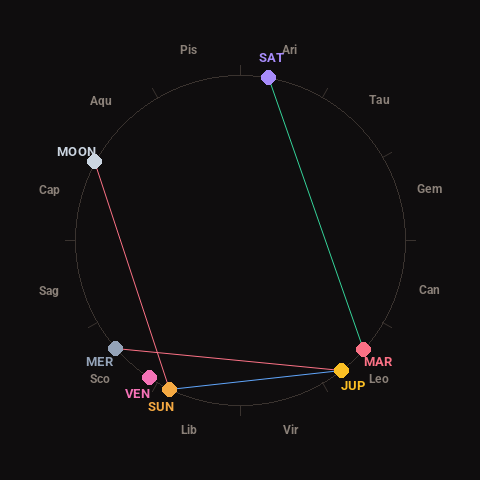
Moon: First Quarter (53% illuminated), in Capricorn.
Notable planetary angles: Mars trine Saturn (122°), Sun sextile Jupiter (63°), Sun square Moon (93°), Mercury square Jupiter (87°).
Concurrent space weather: planetary Kp index 1.7; strongest recent solar flare: nothing notable.
This is a factual snapshot, not a claim of cause and effect – researchers are divided on whether lunar, planetary or solar factors influence seismic or weather activity. It’s included so readers can track the pattern for themselves over time.