
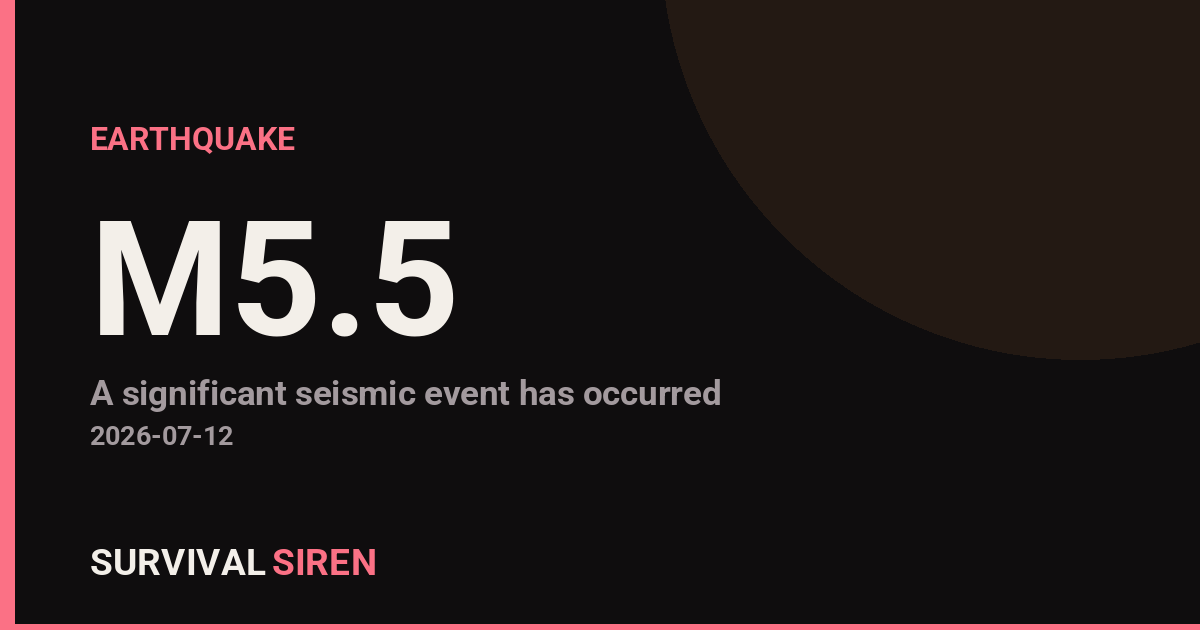
A magnitude 5.5 earthquake occurred on Tuesday at the southern East Pacific Rise, a deep oceanic ridge located in the eastern Pacific Ocean between South America and Antarctica. The quake struck at approximately 10 kilometers (6 miles) depth, according to the U.S. Geological Survey.
The East Pacific Rise is a major underwater mountain range where tectonic plates continuously spread apart, making seismic activity in this region relatively common. Because the epicenter is in open ocean, far from populated coastlines, impacts to communities are minimal. However, nearby ocean-based research stations and ships in the immediate area may have detected noticeable shaking.
NOAA and USGS continue to monitor the region for aftershocks, which are typical following earthquakes of this magnitude. Currently, there are no tsunami warnings or alerts issued for this event.
What to Watch
1. Aftershock Activity: Magnitude 5+ earthquakes often produce smaller aftershocks in the hours and days that follow. Monitor official USGS and NOAA updates if you have interests in the South Pacific region or oceanic research.
2. Regional Updates: While this particular quake poses no direct threat to land-based communities, it’s a good reminder to keep emergency kits and family communication plans updated, especially if you live in seismically active zones along the Pacific coast of North or South America.
3. Data Literacy: Events like this are opportunities to familiarize yourself with earthquake magnitude scales and depth information. Understanding the difference between magnitude (energy released) and depth (how far underground) helps you assess real risk levels rather than reacting to headline numbers alone.
For real-time updates on earthquake activity worldwide, monitor official USGS Earthquake Hazards and NOAA resources. Data in this alert comes from NOAA and the USGS; for live space weather and seismic monitoring, visit https://survivalsiren.com/spaceweather/feed.html.
Source: USGS
Related Reading
Sky Conditions at the Time
Moon: Waning Crescent (6% illuminated), in Gemini.
Notable planetary angles: Sun conjunct Mercury (1°).
This is a factual snapshot, not a claim of cause and effect – researchers are divided on whether lunar, planetary or solar factors influence seismic or weather activity. It’s included so readers can track the pattern for themselves over time.