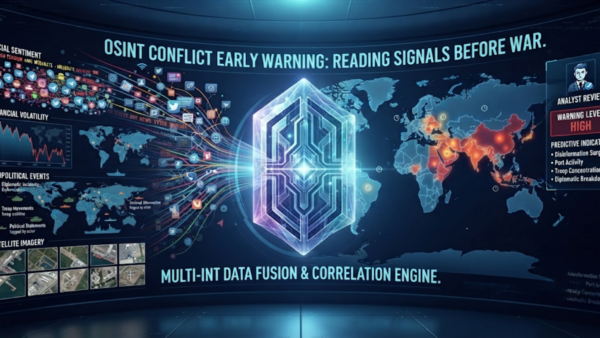

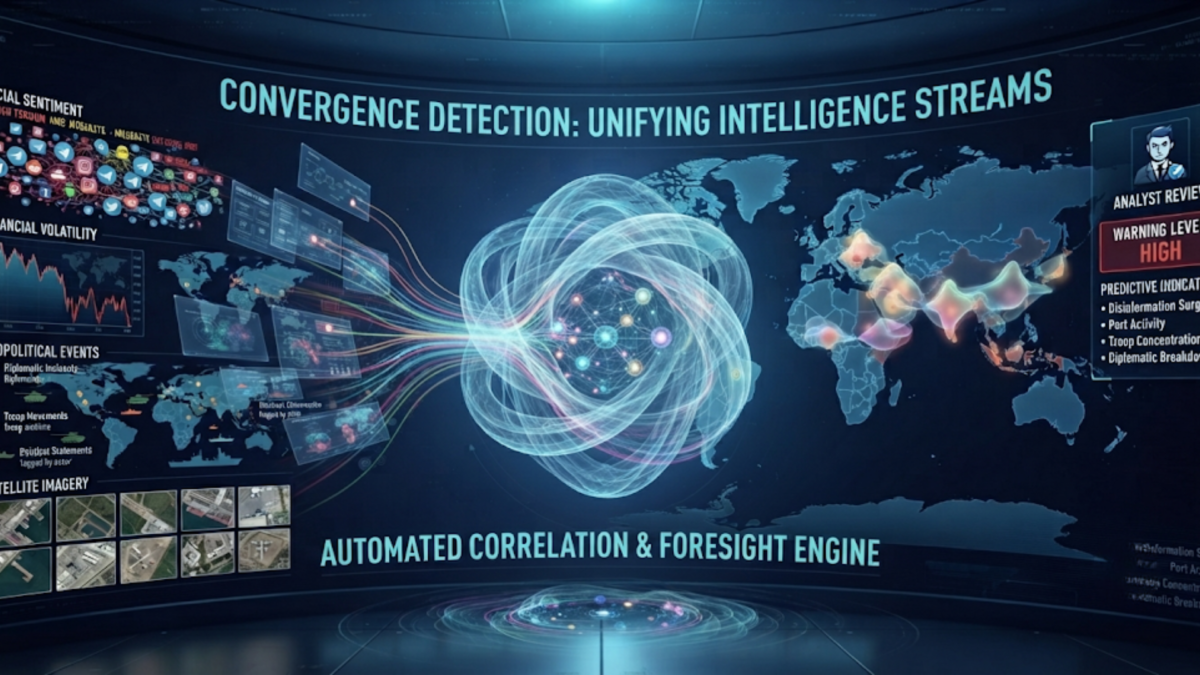
No single photograph won the Cuban Missile Crisis. On October 14, 1962, a U-2 pilot named Richard Heyser flew over Cuba and brought back 928 images, and CIA photo interpreters spotted what looked like medium-range ballistic missile equipment the next day. That alone was suggestive, not conclusive. What actually convinced Washington was that the imagery lined up with technical reporting a GRU officer named Oleg Penkovsky had already handed to the CIA and MI6, describing exactly how Soviet missile regiments were laid out and equipped, while NSA signals intercepts independently tracked Soviet personnel arriving on the island. Three separate collection disciplines, none of them individually definitive, pointed at the same conclusion at the same time. That is convergence detection, and it remains the single most important discipline separating a confident intelligence judgment from an educated guess.
Why One Source Is Never Enough
The basic logic is simple enough to state in a sentence: when independent, unrelated sources report the same fact without having coordinated, confidence in that fact rises sharply, because the odds of several separate error chains all pointing the same direction are much lower than the odds of one source being wrong. Modern open-source practice has formalized this into a pipeline that moves from ingestion through cross-referencing and verification before an analyst ever reaches synthesis, treating corroboration not as a nice-to-have final check but as a core discipline running through the entire process. A single tweet, a single satellite pass, a single defector’s account, none of these are treated as fact on their own. They are treated as a claim awaiting confirmation from somewhere else entirely.
The intellectual foundation for this comes largely from Richards Heuer, a 45-year CIA veteran whose internal essays from the late 1970s and early 1980s were eventually compiled into what became the agency’s own textbook on the psychology of intelligence analysis. Heuer’s central insight was uncomfortable for an institution built on expert judgment: the human mind is poorly wired for the kind of uncertainty intelligence work actually involves, and analysts left to their own instincts tend to seize on the first plausible explanation and then unconsciously search for evidence that confirms it.
His answer was the analysis of competing hypotheses, a technique that forces an analyst to lay out every plausible explanation for a body of evidence and then work to disprove each one rather than build a case for a favorite. Convergence detection is what that method looks like in practice. It is confirmation bias’s structural opposite, because it only counts a signal as meaningful once something independent of it says the same thing.
How Analysts Actually Find the Overlap
Geolocation work at organizations like Bellingcat shows the method at street level. The discipline is methodical: identify the most visually distinctive feature in a photo or video, whether that is a building facade, a road junction, or a distant hillside, search for that feature independently, narrow the candidate region, and then confirm with a second and third feature before committing to a location. Investigators go a step further than most people assume, because the reference imagery used to confirm a location also has to be checked, since satellite geotags and old street-level captures can themselves be stale or wrong. One of Bellingcat’s more detailed investigations cross-referenced car registration data and delivery records against a leaked Russian database to identify individuals working at a missile facility, a case where no single data source would have meant anything, but three unrelated ones pointing at the same names built a case that held up.
Military and intelligence agencies describe a version of the same idea under a different name: all-source intelligence, meaning judgments built by fusing imagery, signals, human reporting, and open material rather than trusting any single discipline in isolation. The Cuban Missile Crisis is the textbook case precisely because it happened before that doctrine had a name, and the individuals involved arrived at it out of necessity rather than following a manual. Necessity is usually how these methods get discovered. The value of convergence only becomes obvious once someone has been burned by trusting a single, uncorroborated source that turned out to be wrong, deceptive, or simply mistaken.
When Convergence Fails, and Why That Matters More Now
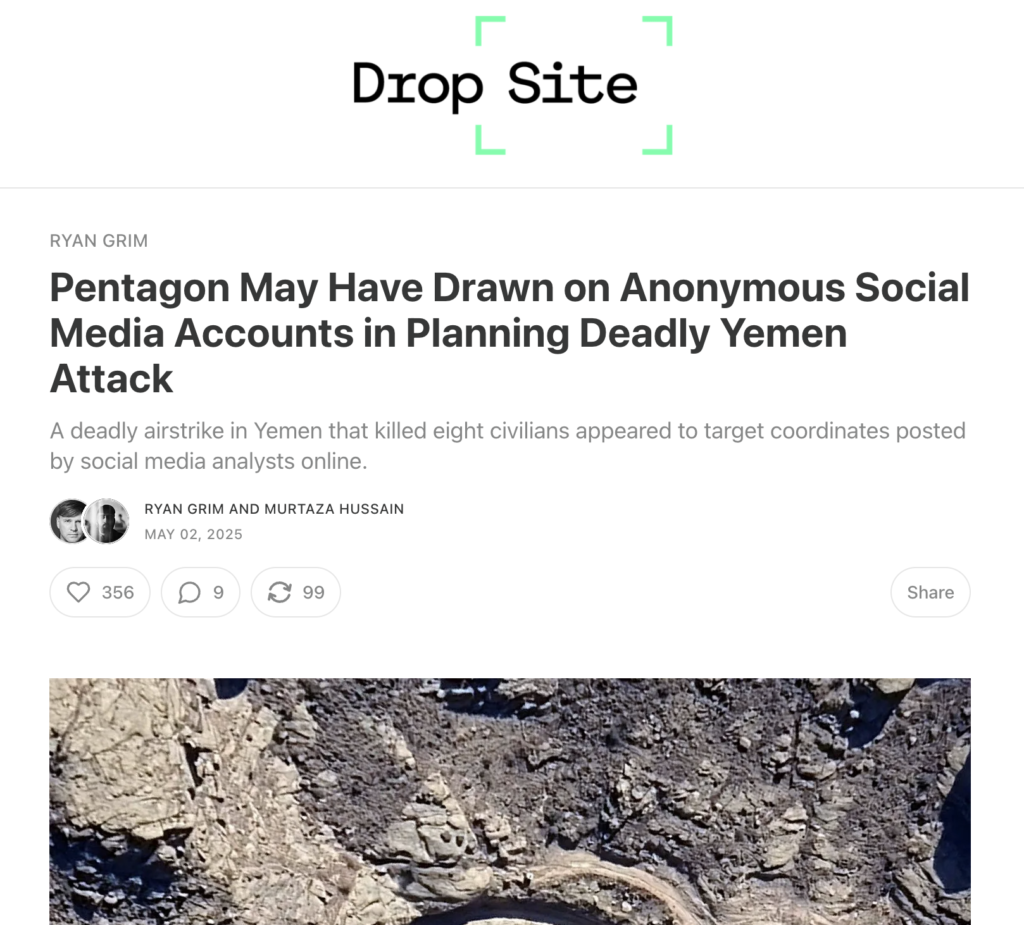
Convergence detection has a well-documented failure mode, and it is not theoretical. In 2025, a Dutch open-source account on X identified what it believed was a Houthi underground missile facility in Yemen. The site was in fact a civilian quarry, and reporting indicates the US military acted on that single, unverified identification, resulting in a strike that killed eight civilians. Nothing about that judgment had gone through a genuine convergence process.
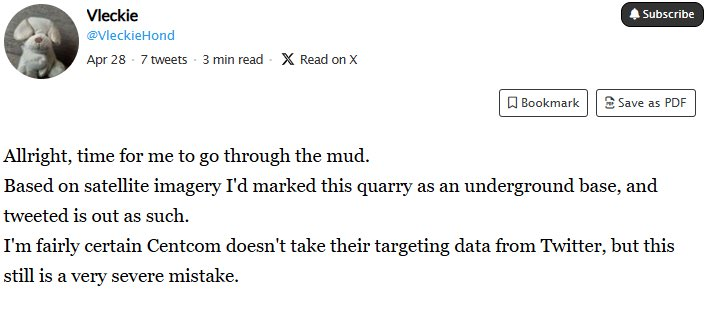
One account made a claim, and the claim moved directly into a targeting decision without a second or third independent source confirming it. The tragedy is not really a story about bad OSINT tools. It is a story about what happens when the discipline of convergence detection gets skipped under time pressure, and the analytical shortcut that normally saves lives instead costs them.
Denial and deception operations exploit exactly this weakness deliberately. An adversary who understands that analysts look for corroboration can manufacture it, seeding several apparently independent channels with the same false narrative so that a lazy convergence check waves it through. Effective deception is most dangerous when it is mixed with real, verifiable truth, because a target who confirms part of a story is far more likely to accept the rest of it without further checking. This is why disciplined analysts don’t just count how many sources agree. They ask whether those sources could plausibly be independent of each other in the first place, whether they share funding, sourcing chains, or an interest in the same outcome, before treating agreement between them as meaningful.
The Discipline Is Getting Harder to Apply
What has changed since Penkovsky and the U-2 is not the logic of convergence, but the cost of faking it. Generative tools have made synthetic imagery, cloned voices, and fabricated documents cheap enough that the old assumption that visual or auditory confirmation counts as verification is no longer safe to rely on.
An analyst can, in principle, now be shown three or four seemingly independent pieces of synthetic evidence that were all generated from the same prompt, which is convergence in appearance without any of the underlying independence that makes convergence meaningful in the first place. The February 2026 exchange between Israel, the United States, and Iran, sometimes referred to as Operation Epic Fury, put this problem on full display, with fact-checking outlets expanding their teams to include ballistic and munitions experts specifically because verifying footage from the conflict required combining technical weapons knowledge with traditional open-source methods.
Newer tools are trying to keep pace on the collection side. Multi-agent AI systems launched in late 2025 can now scan a single image for landmarks, terrain, and architectural cues and return coordinates in seconds, compressing work that used to take a geolocation specialist hours. Speed like that is genuinely useful, but it does nothing to solve the deeper problem, which is that a faster tool for finding one signal is not a substitute for a second, truly independent one.
Convergence detection has survived as intelligence tradecraft’s most reliable safeguard precisely because it does not ask analysts to trust any single source, however compelling. It asks them to wait for agreement between sources that had no reason to agree except that the underlying fact was real. That discipline held up against a lying general in 1962 and a doctored quarry photo in 2025. Whether it holds up against a synthetic media pipeline capable of generating a dozen convincing, mutually corroborating fakes before an analyst finishes their coffee is the open question the field has not yet answered.