

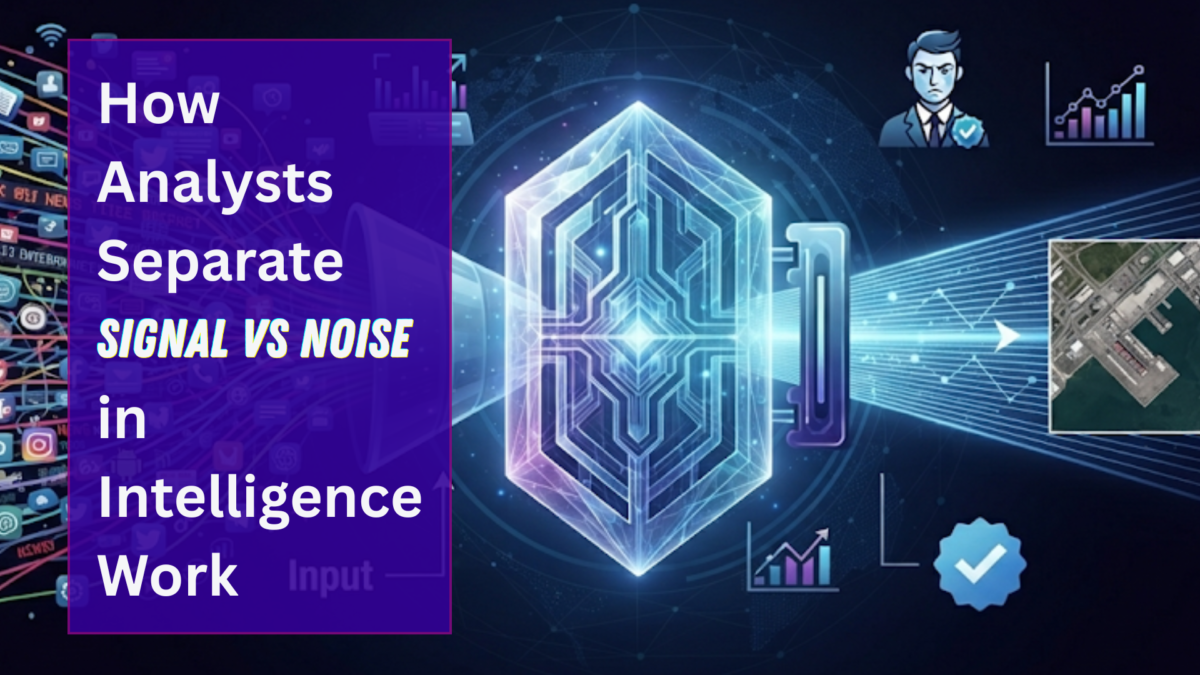
The United States had the intelligence needed to anticipate the attack on Pearl Harbor. It was buried inside an avalanche of intercepted traffic, diplomatic cables, and routine reporting that nobody had the tools or the time to properly sort. Historian Roberta Wohlstetter, writing the definitive study of the disaster nearly two decades later, gave this problem a name that has outlived every intelligence reform since: the signal-to-noise problem, where the ratio of extraneous, irrelevant information to genuinely meaningful warning became so lopsided that the signal simply could not be heard. Eighty-five years on, analysts face the same fundamental problem at a scale Wohlstetter could never have imagined, and solving it remains the single hardest part of the job.
The Problem Wohlstetter Named Still Defines the Field
Wohlstetter’s 1962 book, Pearl Harbor: Warning and Decision, is still treated as the foundational text on intelligence surprise, and for good reason. Her core finding was uncomfortable precisely because it removed the easy villain from the story. There was no single missing report, no lone analyst who buried a smoking gun. There were, instead, dozens of scattered signals distributed across multiple agencies that never independently verified impending war, sitting alongside a far larger volume of routine, contradictory, or simply irrelevant traffic that made the real warnings indistinguishable from background static. So thoroughly has this framing entered intelligence culture that referencing the “Wohlstetter problem” inside the community requires no further explanation. It became the reference point cited again after September 11, 2001, when investigators found a similar pattern: fragments of warning present in the system, none of them loud enough on their own to cut through everything else competing for attention.
The Volume Problem Has Gotten Dramatically Worse
What has changed since 1941 is not the existence of the signal-to-noise problem but its scale. Open-source intelligence work today means confronting exabytes of video, text, and imagery generated daily, a volume that exceeds human cognitive capacity by any reasonable measure. Research on decision-making under information overload backs up what analysts have long felt intuitively: additional information can obscure the signal and increase the noise, and beyond a certain point, more data actively degrades decision quality rather than improving it. That is a counterintuitive finding for anyone who assumes more information is unambiguously good, but it tracks with how human attention actually works. There is a hard ceiling on how much conflicting, unverified material a person can hold in mind at once before the genuinely important detail gets lost among a hundred plausible-sounding but ultimately irrelevant ones.
The mismatch is structural, not just a matter of working harder. Intelligence agencies employ tens of thousands of analysts collectively, but that workforce is neither sized for nor evenly distributed across the volume and velocity of modern data streams, and the gap between what gets collected and what gets properly reviewed keeps widening. Practitioners describe the signal-to-noise ratio in some current alerting systems as flatly catastrophic, with the bulk of automated alerts amounting to stale indicators, duplicates, or material with no real bearing on the question at hand. The strategic value of OSINT, as more than one analyst has put it, was never really in collection. It has always been in analysis, and collection without a disciplined filtering process just produces more noise to filter.
The Methods Analysts Actually Use
Formal intelligence tradecraft developed structured analytic techniques specifically to fight this problem, and the best known is the Analysis of Competing Hypotheses, or ACH, a method that traces back to CIA veteran Richards Heuer’s work on the psychology of intelligence analysis in the late 1970s and early 1980s. ACH forces an analyst to lay out every plausible explanation for a body of evidence side by side and then work systematically to disprove each one, rather than settling on a favored theory early and unconsciously hunting for evidence that confirms it. That instinct, seizing the first plausible story and reading everything afterward through that lens, is exactly the cognitive shortcut that turns a noisy environment into a confidently wrong conclusion.
The technique is not without critics. Structured analytic techniques were designed to check two distinct sources of error, systematic bias and random noise, but researchers examining ACH have pointed out that analysts using the method do not necessarily share a common interpretation of what counts as evidence being “consistent” or “inconsistent” with a given hypothesis, which leaves room for exactly the kind of subjective disagreement the method was meant to eliminate. No one has rigorously tested whether breaking a problem down into a matrix of hypotheses and evidence actually reduces noise in the final judgment or just relocates it somewhere less visible. The honest position, and the one most practicing analysts hold, is that ACH and similar frameworks meaningfully improve on unstructured gut-call analysis without fully solving the underlying problem.
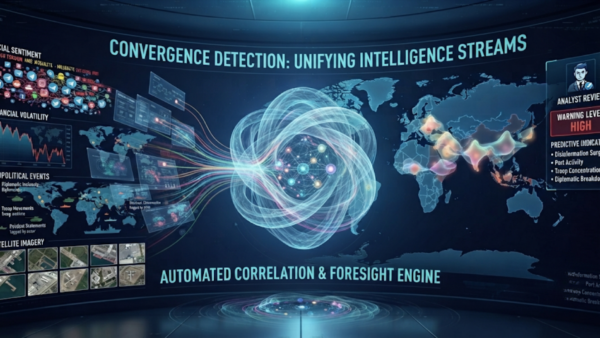
A second, complementary approach is convergence, treating no single unverified source, whether a tweet, a satellite pass, or a defector account, as fact on its own, and instead waiting for independent, uncoordinated sources to align before treating a conclusion as reliable. The logic is straightforward: the odds of several unrelated error chains all pointing the same direction by coincidence are far lower than the odds of one source simply being wrong, so agreement across independent channels is the closest thing analysts have to genuine confirmation in an environment where any single input might be mistaken, manipulated, or outright fabricated.
Artificial Intelligence Is Changing the Triage Layer, Not Replacing Judgment
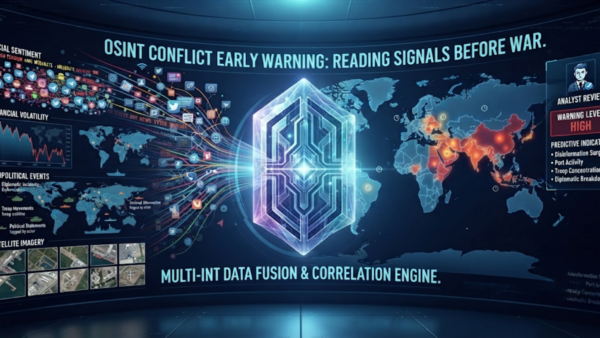
The most consequential shift underway in 2026 is the arrival of large language models as a triage layer sitting in front of human analysts. AI tooling built for open-source work now focuses on entity extraction, clustering near-duplicate reports, removing obvious noise, and suggesting pivots for further investigation, work that delivers the biggest return precisely where volume is high and judgment requirements are comparatively low. Systems can now ingest thousands of scattered data points, correlate them, and surface connections that would previously have taken a human analyst days of manual cross-referencing to find. That is a genuine capability shift, not marketing language, and it directly attacks the volume half of Wohlstetter’s original problem.
What it does not do is replace the judgment half. Practitioners are explicit that this remains augmentation rather than replacement, with AI-generated output treated the way a competent supervisor treats a junior analyst’s first draft, a useful starting point that still needs independent verification rather than a finished answer. The risk that keeps surfacing in current discussion is that speed quietly substitutes for rigor, since an AI-generated summary can look just as authoritative whether it is right or subtly wrong, and a factual error embedded early in that process can survive unchallenged all the way into a finished assessment if nobody checks the underlying sources.
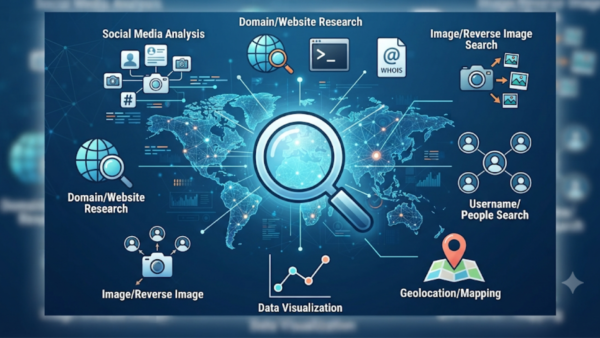
That risk has grown sharper as the noise itself has become synthetic. Deepfake video, AI-written fake news, and coordinated bot networks are no longer a hypothetical threat analysts might someday face, they are already flooding the same channels analysts depend on for genuine signal, sometimes faster than a fact-checking desk can respond. Verification workflows built around metadata analysis, reverse image and video searches, and forensic checks for manipulation artifacts have become as central to modern analysis as the classic cross-referencing techniques Bellingcat popularized for geolocation work. Some practitioners argue the next phase of this fight will move past verifying whether a single piece of content is real and toward detecting synthetic behavioral patterns at scale, since a coordinated network of thousands of AI-generated personas acting in concert is a fundamentally different kind of noise than a single doctored photo.
The Discipline Hasn’t Changed, Only the Stakes
Strip away the technology and the underlying discipline analysts rely on today is recognizably the same one Wohlstetter described in 1962: distrust any single source, actively search for disconfirming evidence rather than confirming it, and wait for independent convergence before committing to a conclusion. What has changed is the volume of noise competing for a spot in that process, now measured in exabytes rather than intercepted cables, and the fact that a meaningful share of that noise is now manufactured on purpose rather than simply generated as an accidental byproduct of a busy world. The tools available to fight through it have improved enormously since 1941. Whether human judgment can keep pace with a noise floor that is rising faster than any filtering system can adapt to it is the question the next intelligence failure, whenever it arrives, will end up answering.
1 Comment