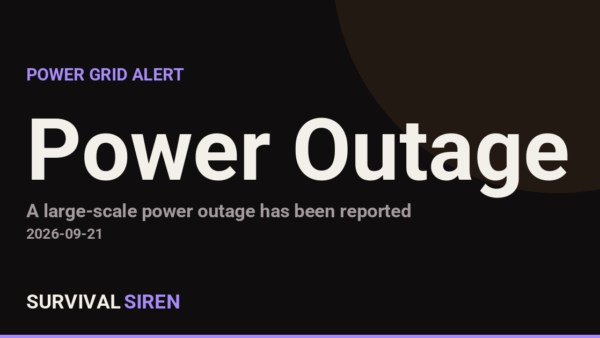

A widespread power outage is affecting Cuba as of today. While initial reports attribute the outage to various causes, a severe geomagnetic storm—a space weather event tracked by NOAA—remains one possible contributor to large-scale grid failures of this type.
Geomagnetic storms occur when the Sun ejects charged particles that interact with Earth’s magnetic field. During intense storms (rated G4 or G5 on NOAA’s scale), these particles can induce powerful electrical currents in long transmission lines and transformers, potentially causing widespread blackouts. Cuba’s power infrastructure, like many island grids, relies on centralized generation and long-distance transmission lines that are particularly vulnerable to these induced currents.
What You Might Notice During a Geomagnetic Storm
If your region is affected by severe space weather, you may experience power disruptions, temporary loss of GPS or satellite services, or radio interference. In areas with older or stressed electrical grids, these effects are more pronounced. Most people in developed nations are well-insulated from severe impacts due to grid protections, but widespread outages—like the one in Cuba—demonstrate why preparedness matters.
Who Is Affected: Island nations and regions with aging infrastructure face the highest risk. However, any area can experience outages from extreme geomagnetic storms.
What You Can Do: Keep flashlights, batteries, and a battery-powered or hand-crank radio on hand. Store at least three days of water and non-perishable food in case local supply chains are disrupted. If you rely on medications requiring refrigeration, know your backup plan. Finally, consider downloading offline maps and keeping your phone charged—cellular networks may be affected during severe storms.
For real-time updates on current space weather conditions and storm severity, visit NOAA’s live dashboard at https://survivalsiren.com/spaceweather/feed.html.
Source: MSN
Sky & Solar Conditions at the Time
Moon: First Quarter (54% illuminated), in Scorpio.
Notable planetary angles: Moon square Jupiter (89°), Mars sextile Saturn (61°), Mercury square Saturn (92°), Venus square Mars (87°).
Concurrent space weather: planetary Kp index 3.0; strongest recent solar flare: M1.9-class.
This is a factual snapshot, not a claim of cause and effect – researchers are divided on whether lunar, planetary or solar factors influence seismic or weather activity. It’s included so readers can track the pattern for themselves over time.