
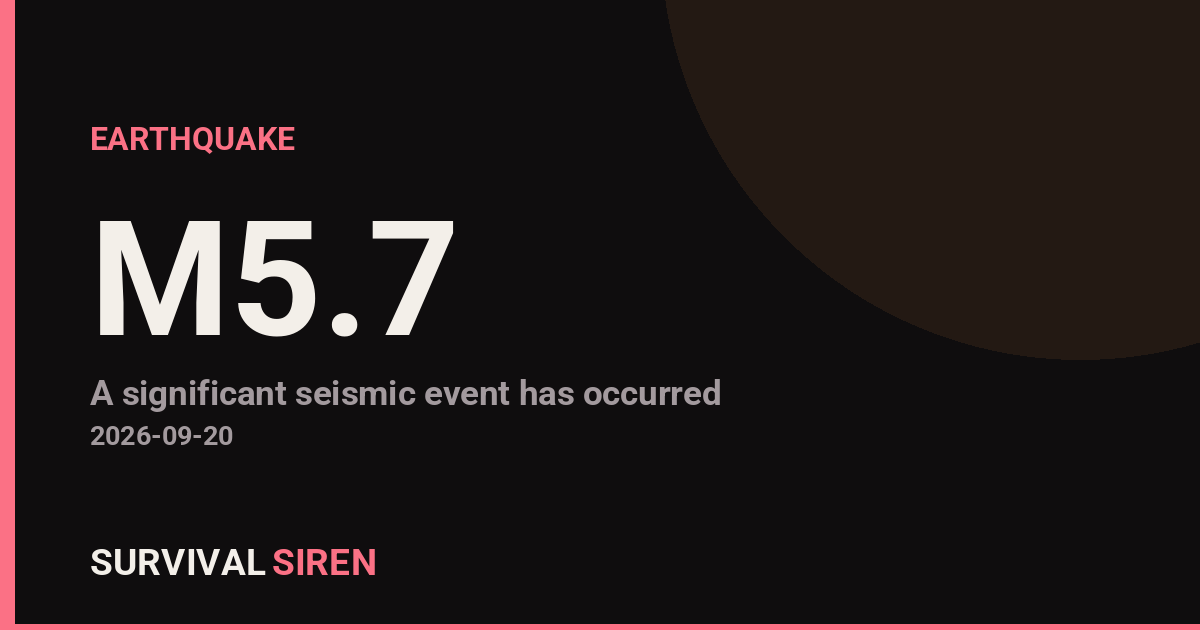
A magnitude 5.7 earthquake struck in the ocean south of Africa at a shallow depth of about 10 kilometers (roughly 6 miles), according to the U.S. Geological Survey. The quake occurred along the remote submarine ridge system between the southern tip of Africa and Antarctica, a tectonically active zone where ocean-floor plates slowly pull apart.
Because the epicenter is far offshore in the open southern ocean, no populated areas are expected to have felt strong shaking. People aboard ships in the region may have noticed a brief jolt, but residents of South Africa’s coastal cities such as Cape Town and Port Elizabeth would not have felt anything at this distance. There are no reports of damage or injuries, and none are expected.
What readers might notice
Realistically, almost nothing. This quake’s location is one of the most remote on the planet. The main reason it appears in monitoring feeds is that the global seismograph network is sensitive enough to detect moderate earthquakes anywhere on Earth, including beneath empty ocean.
A magnitude 5.7 is a moderate event. On land near a town it could crack walls or knock items off shelves, but beneath deep ocean far from coastlines its effects are limited to the immediate seafloor. Earthquakes of this size occur somewhere in the world roughly a thousand times per year, and the vast majority cause no harm.
Watch-items and pointers:
First, there is no tsunami threat of concern from this event. Quakes at this magnitude rarely displace enough seafloor to generate dangerous waves, and none has been detected. Second, light aftershocks are possible in the same area over the coming days, but these are normal and will also go unnoticed on land. Third, this is a good low-stress reminder for readers in seismically active regions to review basics: secure tall furniture, know where to drop and cover, and keep a small emergency kit ready.
Data for this alert comes from the U.S. Geological Survey (USGS) earthquake monitoring network.
Frequently Asked Questions
Was this earthquake felt in South Africa or other nearby cities?
No. The epicenter is far offshore in the remote southern ocean, hundreds of kilometers from the nearest land, so people in Cape Town or other coastal cities would not have felt it.
Is a tsunami possible from this quake?
A magnitude 5.7 earthquake very rarely generates a tsunami, as it typically does not displace enough seafloor. No tsunami has been detected and no warnings have been issued.
Are aftershocks likely?
Small aftershocks are common after a moderate quake like this, but given the remote ocean location they would go completely unnoticed by anyone on land.
Is there any danger to people or ships?
No injuries or damage have been reported. Ships directly over the epicenter might have felt a brief jolt, but there is no ongoing hazard.
Keep tracking this:
Source: USGS
Related Reading
- Global Seismic Stress Report: Southern Ocean Activity Rises While Six Segments Go Quiet
- Earthquake Survival: Precautions, Kit & Early Warning in 2026
- Analyzing Low-Radiation Nuclear Explosions: Tactical Assessments and Survival Strategies









Map centered on the epicenter (-48.43, 31.23). Map data © OpenStreetMap contributors.
Sky & Solar Conditions at the Time
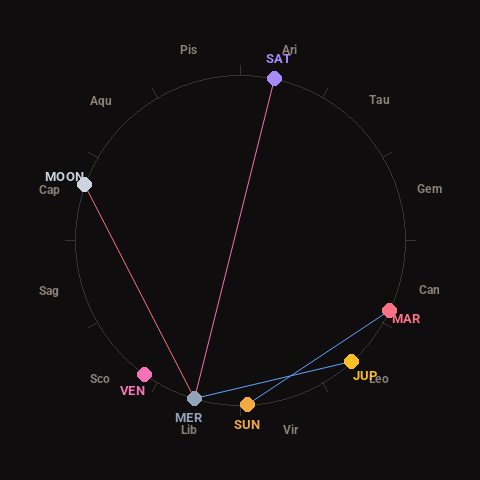
Moon: First Quarter (69% illuminated), in Capricorn.
Notable planetary angles: Mercury sextile Jupiter (59°), Sun sextile Mars (62°), Mercury opposite Saturn (176°), Moon square Mercury (94°).
Concurrent space weather: planetary Kp index 0.3; strongest recent solar flare: nothing notable.
This is a factual snapshot, not a claim of cause and effect – researchers are divided on whether lunar, planetary or solar factors influence seismic or weather activity. It’s included so readers can track the pattern for themselves over time.
Earthquakes Within ~400 km, Past 30 Days
For context, here is other recent seismic activity in the surrounding region (M2.5+, via USGS):
| Date & Time (UTC) | Magnitude | Location |
|---|---|---|
| 2026-08-27 05:30 UTC | M4.5 | Prince Edward Islands region |