
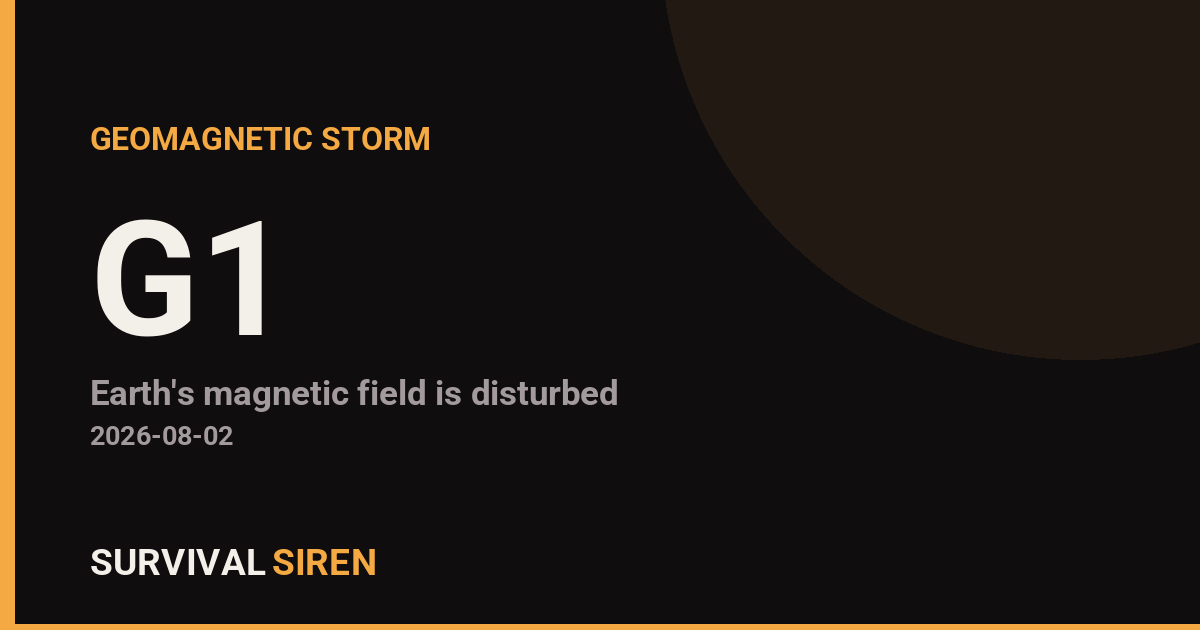
A minor geomagnetic storm is currently in progress, with the planetary Kp index at 5.7 according to NOAA measurements. This is classified as a G1-level event—the mildest category on the geomagnetic storm scale—and poses no serious threat to most people or infrastructure.
What’s Happening
Solar wind is interacting with Earth’s magnetic field more strongly than usual, creating visible auroras and triggering minor disruptions in technology systems. If you live in northern-tier US states (Minnesota, Wisconsin, Montana, and similar latitudes), Canada, Scotland, or Scandinavia, you may see aurora displays tonight, particularly after dark in rural areas away from light pollution.
Who Is Affected
Power grid operators and satellite operators are aware and monitoring systems closely. Disruptions, if they occur, are expected to be minor and brief. Airlines, GPS users, and the general public are unlikely to notice meaningful impacts from a G1 storm. Migratory birds and whales may experience brief navigation confusion, but this typically has no long-term consequence.
What You Might Notice
If you’re in aurora zones, check outside around midnight or early morning for unusual colored lights. In other areas, you probably won’t observe anything unusual. If you depend on GPS for work or recreation, be aware there may be brief, small accuracy variations.
Three Practical Steps: First, if you have backup power systems or battery supplies, confirm they’re in good working order—routine maintenance during calm periods is always wise. Second, if you’re in northern regions and interested in aurora viewing, find a dark location away from city lights and check back periodically tonight. Third, keep an eye on weather and space weather forecasts; minor storms sometimes develop into stronger ones, though the current forecast shows this event remaining at G1 level.
For real-time updates and detailed space weather data, visit our live dashboard at https://survivalsiren.com/spaceweather/feed.html, powered by NOAA observations.
Source: NOAA Space Weather Prediction Center
Sky & Solar Conditions at the Time
Moon: Waning Gibbous (83% illuminated), in Pisces.
Notable planetary angles: Venus square Mars (92°), Sun conjunct Jupiter (3°), Moon opposite Venus (177°).
Concurrent space weather: planetary Kp index 5.7; strongest recent solar flare: nothing notable.
This is a factual snapshot, not a claim of cause and effect – researchers are divided on whether lunar, planetary or solar factors influence seismic or weather activity. It’s included so readers can track the pattern for themselves over time.