
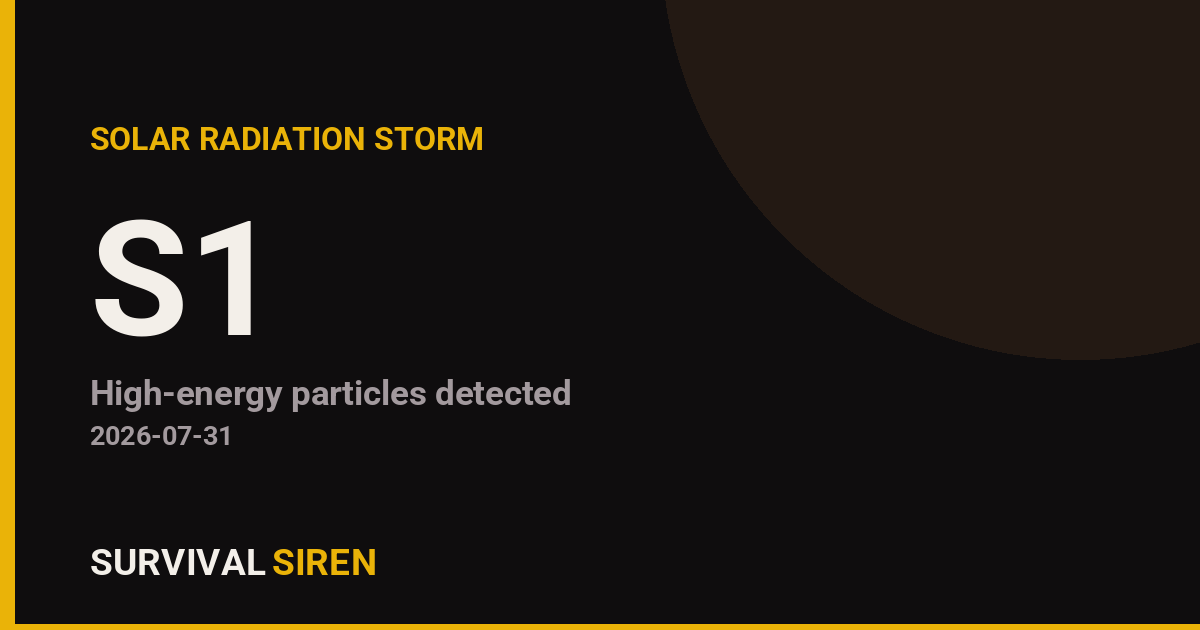
A solar radiation storm (S1 level) is currently underway, with proton flux measurements reaching 10 particle flux units (pfu) as tracked by NOAA. This is a minor event on the space weather scale, but it’s worth understanding what it means and who it affects.
What Happened
The sun has released energetic particles that are traveling toward Earth. When proton flux crosses the 10 pfu threshold, it officially enters the S1 category—the lowest level of the five-tier solar radiation storm scale. These particles are already reaching Earth’s vicinity.
Who This Affects Most
The primary impacts are felt by satellite operators, astronauts in orbit, and airline crews and passengers flying polar routes (mainly between North America and Asia). People in these groups experience elevated radiation exposure during these events. High-frequency (HF) radio communications in polar regions may also experience degradation or blackouts.
For the general population on the ground, effects are negligible. Earth’s magnetic field and atmosphere shield us effectively from this level of solar activity.
What You Might Notice
You may not notice anything directly. However, if you’re a radio hobbyist relying on HF bands in northern latitudes, you might experience unusual interference or dead zones. Satellite TV or GPS services in remote polar areas could be temporarily affected, though major networks have redundancies in place.
Practical Watch Items
First, if you rely on HF radio for communication or hobby purposes, keep backup methods ready—phone or satellite messenger devices are good options. Second, those monitoring space weather as part of emergency preparedness should note that S1 storms can escalate, so tracking the NOAA forecast helps you prepare for more severe events. Third, this is a good reminder to keep your emergency kit accessible; while this event poses minimal risk, it reinforces why staying informed about space weather is valuable preparedness practice.
Current data comes from NOAA’s Space Weather Prediction Center. Monitor live updates at https://survivalsiren.com/spaceweather/feed.html.
Source: NOAA GOES Proton Flux
Sky & Solar Conditions at the Time
Moon: Waning Gibbous (96% illuminated), in Pisces.
Notable planetary angles: Venus square Mars (91°), Sun conjunct Jupiter (1°).
Concurrent space weather: planetary Kp index 1.7; strongest recent solar flare: nothing notable.
This is a factual snapshot, not a claim of cause and effect – researchers are divided on whether lunar, planetary or solar factors influence seismic or weather activity. It’s included so readers can track the pattern for themselves over time.