
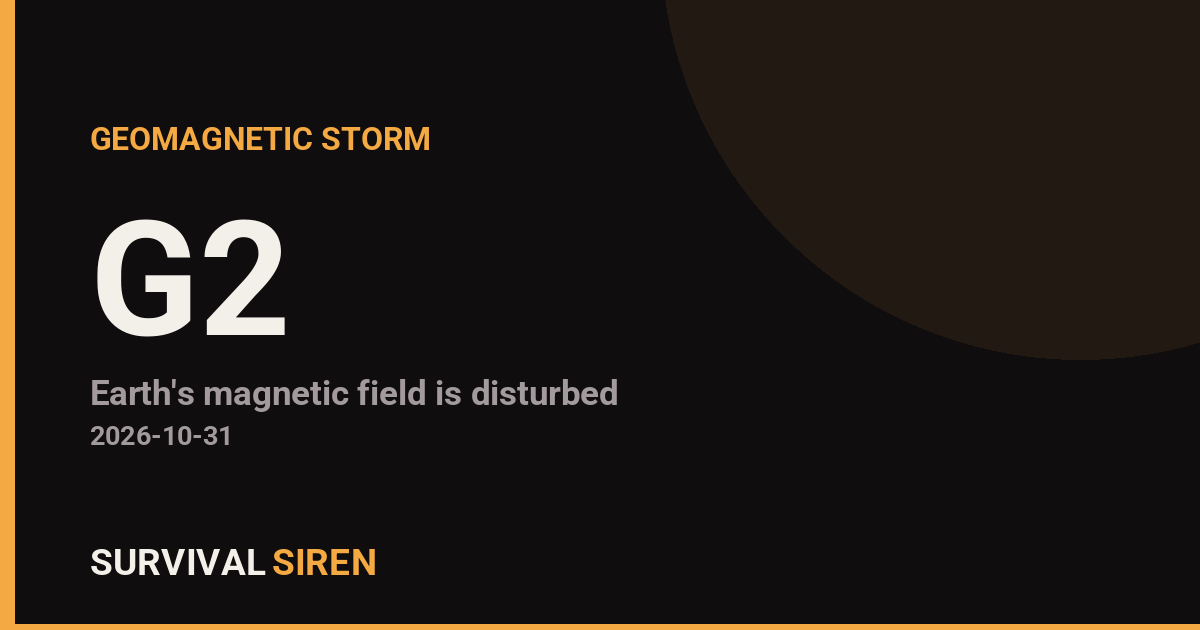
A moderate geomagnetic storm is underway right now. NOAA’s Space Weather Prediction Center reports the planetary Kp index has reached 6.0, which corresponds to a G2 (Moderate) storm on NOAA’s five-level geomagnetic storm scale. This is a real but routine-level event — the kind that occurs multiple times a year and that power grids and satellites are built to handle.
What happened: A burst of energy from the sun has disturbed Earth’s magnetic field strongly enough to push the Kp index — a 0-to-9 measure of geomagnetic activity — to 6.0. At this level, the storm is classified as moderate, not severe.
What you might notice: The most likely visible effect is the aurora (northern lights) dipping farther south than usual. Skywatchers in northern-tier U.S. states, Canada, Scotland, and Scandinavia have a reasonable chance of seeing aurora after dark if skies are clear. Most people will notice nothing else — there is no health risk from geomagnetic storms on the ground.
Who is affected: Primarily operators of power grids, satellites, and high-frequency radio systems. Grid operators may see minor voltage fluctuations and take routine precautions. Satellite operators can experience minor drag and orientation issues. Scientists also note that migratory animals that navigate by Earth’s magnetic field can be affected during storms like this.
Practical watch-items
1. Aurora viewing: If you’re in a northern-tier state, Canada, Scotland, or Scandinavia, check the sky after dark away from city lights — tonight could offer a rare show.
2. Power: Widespread outages are not expected at G2, but it’s never a bad idea to keep devices charged and a flashlight handy during any geomagnetic storm.
3. Radio and GPS quirks: Minor high-frequency radio and satellite-navigation hiccups are possible at high latitudes; pilots, mariners, and ham radio operators should expect occasional degradation.
Data for this alert comes from NOAA’s Space Weather Prediction Center, which monitors geomagnetic activity in real time.
Frequently Asked Questions
Is a G2 geomagnetic storm dangerous to people?
No. Earth's atmosphere and magnetic field protect people on the ground — there is no direct health risk. G2 storms happen several times a year and are considered routine by utilities and satellite operators.
Can I see the northern lights from where I live?
At Kp 6.0, aurora is likely across Canada, Scotland, and Scandinavia, and possible in northern-tier U.S. states like Washington, Minnesota, Wisconsin, Michigan, and Maine. You'll need dark, clear skies and a good view toward the northern horizon.
Will this knock out my power or my GPS?
Widespread power outages are not expected at the G2 level — grid operators see only minor, manageable fluctuations. GPS may be slightly less accurate at high latitudes for a time, but everyday navigation apps should keep working normally.
How long will this storm last?
Geomagnetic storms at this level typically peak over several hours and can persist at elevated levels for a day or two. NOAA updates conditions in real time as the solar wind stream passes Earth.
Keep tracking this:
Source: NOAA Space Weather Prediction Center
Sky & Solar Conditions at the Time
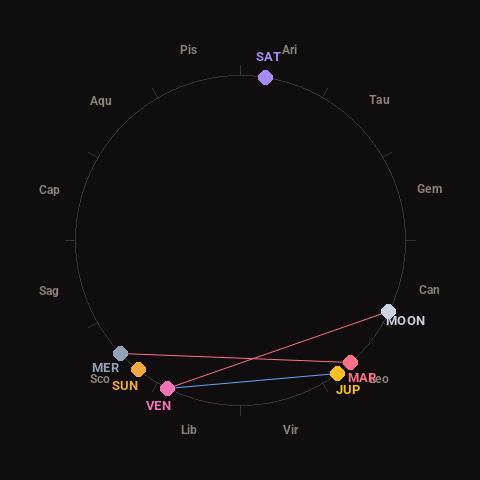
Moon: Last Quarter (61% illuminated), in Cancer.
Notable planetary angles: Moon square Venus (90°), Mercury square Mars (88°), Venus sextile Jupiter (62°).
Concurrent space weather: planetary Kp index 6.0; strongest recent solar flare: nothing notable.
This is a factual snapshot, not a claim of cause and effect – researchers are divided on whether lunar, planetary or solar factors influence seismic or weather activity. It’s included so readers can track the pattern for themselves over time.