
A strong geomagnetic storm is underway right now. The planetary Kp index — a 0-to-9 scale that measures how disturbed Earth’s magnetic field is — has reached 7.0, which corresponds to NOAA’s G3 (Strong) storm level. These storms are triggered when a burst of energy from the Sun arrives at Earth and rattles the planet’s protective magnetic field.
The most visible effect for most people will be the northern lights. At Kp 7.0, aurora is likely at mid-latitudes, meaning skywatchers across much of the northern United States and central Europe may be able to see the glow after dark, weather permitting. Find a dark spot away from city lights and look north for the best chance.
On the practical side, a G3 storm can cause voltage irregularities in some power grids, so utility operators have been alerted and are managing their systems accordingly. GPS accuracy may degrade somewhat, which matters mainly for precision uses like surveying, aviation, and agriculture — your phone’s maps app may be slightly less accurate but will still work. High-frequency (HF) radio used by aircraft on polar routes, mariners, and amateur radio operators may experience intermittent problems, and satellites in low orbit will feel extra atmospheric drag, which operators handle routinely.
What to watch for
First, if you’re in the northern US or central Europe, check the sky after sunset — strong storms like this are the best opportunity many people get to see aurora without traveling to the Arctic. Second, if you rely on GPS for precision work, allow extra margin for error until conditions settle. Third, keep an eye on any further alerts: storms can strengthen or weaken over hours, and forecasters will update the storm level as new solar wind data comes in. There is no need for special emergency preparations — power grids and satellite operators plan for storms of this size as a matter of routine.
Data and storm levels in this alert come from NOAA’s Space Weather Prediction Center.
Frequently Asked Questions
Will this storm knock out my power?
A G3 storm can cause voltage irregularities, and grid operators take protective steps, but widespread outages are not expected at this level. Major blackouts have historically required much stronger G5-class storms.
Can I see the aurora from my location?
At Kp 7.0, aurora is likely visible across much of the northern US and central Europe after dark, if skies are clear. Head somewhere dark and look toward the northern horizon.
Is this dangerous to my health or my electronics at home?
No — geomagnetic storms do not harm people, and household electronics are not at risk. The effects are felt mainly by power grids, satellites, and radio systems, whose operators prepare for events like this.
How long will the storm last?
Geomagnetic storms typically persist for several hours to a day or more, fluctuating in strength as the solar wind stream passes Earth. NOAA updates the storm level as conditions change, so aurora chances may continue into tonight.
Keep tracking this:
Source: NOAA Space Weather Prediction Center
Sky & Solar Conditions at the Time
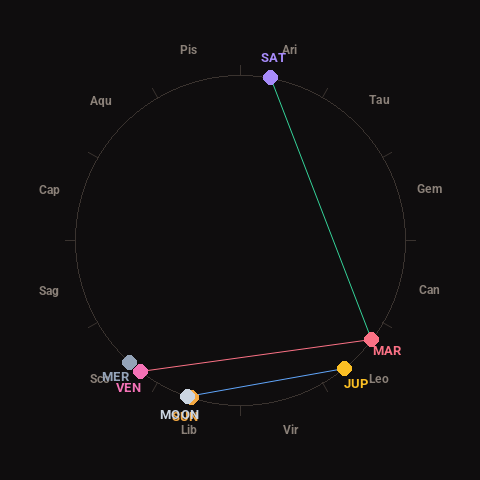
Moon: New Moon (0% illuminated), in Libra.
Notable planetary angles: Venus square Mars (90°), Sun conjunct Moon (2°), Moon sextile Jupiter (58°), Mars trine Saturn (116°).
Concurrent space weather: planetary Kp index 7.0; strongest recent solar flare: M6.5-class.
This is a factual snapshot, not a claim of cause and effect – researchers are divided on whether lunar, planetary or solar factors influence seismic or weather activity. It’s included so readers can track the pattern for themselves over time.