
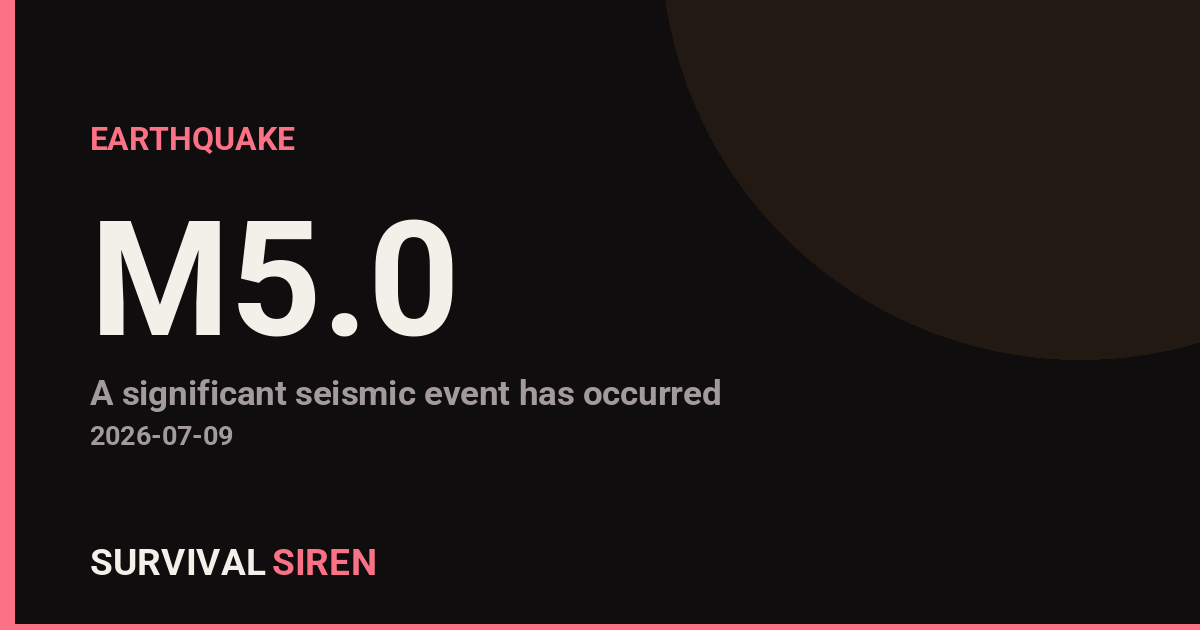
A magnitude 5.0 earthquake struck approximately 1 kilometer north-northwest of Xunchang, China at 10 km depth, according to the U.S. Geological Survey. This moderate-strength quake occurred in a populated region of central China and strong shaking was felt across the surrounding area.
Magnitude 5.0 earthquakes typically cause noticeable shaking indoors and outdoors. People in Xunchang and nearby communities likely experienced rattling dishes, swaying structures, and alarm activation. While this magnitude can cause minor to moderate damage—particularly to older or poorly constructed buildings—it is not considered a major seismic event. The relatively shallow 10 km depth means the shaking was felt more intensely at the surface.
Who Is Affected
Residents within roughly 50 km of Xunchang are in the primary impact zone. This includes surrounding towns and villages in Anhui Province. Emergency services in the region would typically assess for injuries and structural damage, particularly in older buildings.
What to Watch For:
1. Aftershocks: Magnitude 5.0 earthquakes frequently trigger smaller aftershocks over the following hours and days. These are usually weaker but can stress already-damaged structures. If you’re in the region, remain alert for additional shaking.
2. Building Safety: If you live or work in older construction nearby, inspect for visible cracks or structural damage. Aftershocks pose the greatest risk to compromised buildings.
3. Infrastructure Checks: Utility lines, water systems, and roads may sustain damage from moderate earthquakes. Stay informed through local authorities about any service disruptions.
For those in earthquake-prone areas worldwide, this is a good reminder to secure heavy furniture, keep emergency supplies accessible, and review your family’s earthquake response plan.
For ongoing seismic monitoring and space weather updates, visit SurvivalSiren.com’s live dashboard.
Source: USGS
Related Reading
Sky Conditions at the Time
Moon: Last Quarter (37% illuminated), in Taurus.
Notable planetary angles: Moon square Jupiter (90°), Sun square Saturn (92°), Moon trine Venus (117°).
This is a factual snapshot, not a claim of cause and effect – researchers are divided on whether lunar, planetary or solar factors influence seismic or weather activity. It’s included so readers can track the pattern for themselves over time.
Earthquakes Within ~400 km, Past 30 Days
For context, here is other recent seismic activity in the surrounding region (M2.5+, via USGS):
| Date & Time (UTC) | Magnitude | Location |
|---|---|---|
| 2026-07-12 23:27 UTC | M4.4 | 16 km N of Xunchang, China |
| 2026-07-12 21:02 UTC | M4.5 | 14 km WNW of Changning, China |
| 2026-07-12 17:03 UTC | M4.6 | 126 km NNE of Kangding, China |
| 2026-07-08 02:08 UTC | M5.0 | 15 km NNE of Xunchang, China |
| 2026-07-07 22:22 UTC | M4.6 | 13 km SSE of Yibin, China |
| 2026-07-07 22:12 UTC | M5.1 | 13 km W of Changning, China |
| 2026-07-07 20:01 UTC | M4.5 | 11 km N of Xunchang, China |
| 2026-07-05 15:30 UTC | M5.0 | 30 km NNW of Mianzhu, Deyang, Sichuan, China |
| 2026-07-05 15:20 UTC | M4.6 | 30 km NNW of Mianzhu, Deyang, Sichuan, China |
| 2026-07-05 15:03 UTC | M4.9 | 27 km NW of Mianzhu, Deyang, Sichuan, China |
| 2026-06-28 16:12 UTC | M5.2 | 13 km WNW of Changning, China |
| 2026-06-24 02:53 UTC | M4.2 | 114 km NNW of Qujing, China |
Emergency number for China: 110 (police) / 120 (ambulance) (General guidance – always verify locally, as this can vary by region.)