
A magnitude 5.5 earthquake struck the Kermadec Islands region, in the southwest Pacific north of New Zealand, at a depth of roughly 94 kilometers (about 58 miles), according to the U.S. Geological Survey.
Because this quake occurred deep underground, its energy had to travel through a lot of rock before reaching the surface. That generally means weaker, more spread-out shaking than a shallow quake of the same size. The Kermadec Islands themselves are remote and uninhabited, with only a small scientific station on Raoul Island, so there are no cities or towns directly above the epicenter. Moderate shaking may have been felt by anyone in the immediate surrounding region, but there are no reports of damage or injuries, and none would be expected for a quake of this size and depth in this location.
What to keep in mind
For readers in New Zealand and the South Pacific, there is little cause for concern from this specific event, but it is a good reminder of a few practical points:
Tsunami risk is very low. Deep earthquakes like this one rarely generate tsunamis because they do not displace the seafloor the way large, shallow quakes can. No tsunami warning has been issued.
Aftershocks are possible. The Kermadec region sits on an active tectonic boundary and frequently produces earthquakes, including occasional large ones. Smaller follow-up quakes in the coming days would be normal and are not, by themselves, a sign of anything bigger coming.
Review your basics. If you live in a quake-prone part of the Pacific, this is a low-stress moment to check that your household kit has water, food, medications, and a way to receive alerts, and that everyone knows to drop, cover, and hold on during shaking.
This information comes from the U.S. Geological Survey (USGS) earthquake monitoring network.
Frequently Asked Questions
Was this earthquake felt in New Zealand?
Possibly as faint shaking in northern areas, but at 94 km deep and hundreds of kilometers offshore, most people in New Zealand would not have noticed it. No damage has been reported.
Is a tsunami possible from this quake?
It is very unlikely. Deep earthquakes rarely displace the seafloor enough to generate a tsunami, and no tsunami warning has been issued for this event.
Are aftershocks likely?
Yes, smaller aftershocks are common after a magnitude 5.5 quake, especially in the seismically active Kermadec region. They are typically weaker than the main shock and not a cause for alarm.
Should I be worried about a bigger earthquake coming?
There is no way to predict earthquakes, and most events like this are not followed by anything larger. The sensible step is simply to keep a basic emergency kit and plan in place, which is good practice anywhere in the Pacific.
Keep tracking this:
Source: USGS
Related Reading
- Global Seismic Stress Report: Southern Ocean Activity Rises While Six Segments Go Quiet
- Earthquake Survival: Precautions, Kit & Early Warning in 2026
- Analyzing Low-Radiation Nuclear Explosions: Tactical Assessments and Survival Strategies






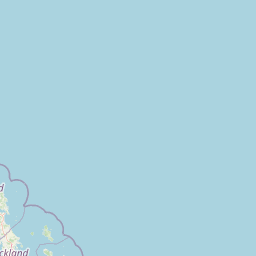


Map centered on the epicenter (-27.86, -177.23). Map data © OpenStreetMap contributors.
Sky & Solar Conditions at the Time
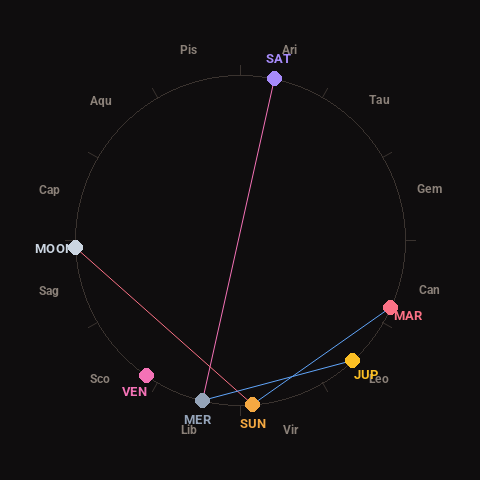
Moon: First Quarter (51% illuminated), in Sagittarius.
Notable planetary angles: Mercury opposite Saturn (179°), Sun sextile Mars (62°), Sun square Moon (92°), Mercury sextile Jupiter (56°).
Concurrent space weather: planetary Kp index 0.7; strongest recent solar flare: nothing notable.
This is a factual snapshot, not a claim of cause and effect – researchers are divided on whether lunar, planetary or solar factors influence seismic or weather activity. It’s included so readers can track the pattern for themselves over time.
Earthquakes Within ~400 km, Past 30 Days
For context, here is other recent seismic activity in the surrounding region (M2.5+, via USGS):
| Date & Time (UTC) | Magnitude | Location |
|---|---|---|
| 2026-09-16 20:03 UTC | M4.9 | Kermadec Islands, New Zealand |
| 2026-09-06 04:52 UTC | M4.6 | Kermadec Islands region |
| 2026-09-05 01:41 UTC | M4.8 | Kermadec Islands, New Zealand |
| 2026-09-04 13:47 UTC | M4.9 | south of the Fiji Islands |
| 2026-09-04 11:59 UTC | M5.4 | Kermadec Islands region |
| 2026-09-02 21:19 UTC | M4.1 | south of the Fiji Islands |
| 2026-09-01 23:46 UTC | M4.5 | south of the Fiji Islands |
| 2026-08-30 09:02 UTC | M5.8 | Kermadec Islands, New Zealand |
| 2026-08-27 19:35 UTC | M4.5 | Kermadec Islands region |
| 2026-08-22 13:35 UTC | M4.6 | Kermadec Islands region |
| 2026-08-22 06:53 UTC | M4.3 | south of the Fiji Islands |
| 2026-08-22 06:36 UTC | M4.4 | south of the Fiji Islands |
| 2026-08-21 08:12 UTC | M5.1 | south of Tonga |
| 2026-08-19 21:11 UTC | M4.4 | Kermadec Islands region |